Logan School One-Day Winter Survival Group Works Hard and Plays Harder

January 22, 2013 by  
Filed under Notes From The Field

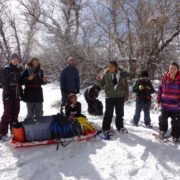
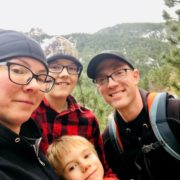
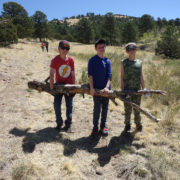
Logan School Winter SurvivalThe sun peaked in on the Cottonwood Institute instructors as they trekked up the steepest part of the hike to Francie’s Cabin, near Breckenridge, CO. Within minutes the temperature change took them from cold to sweating, shedding their early morning layers. A short time later they broke into a clearing just below the hut, revealing sun-drenched bowls and mountain ridges covered in snow: Colorado splendor at its greatest. This was the playground and backdrop of the The Logan School Winter Survival Day with Cottonwood Institute.

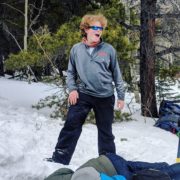
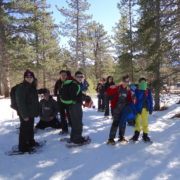
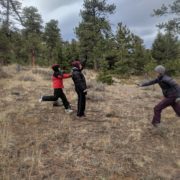
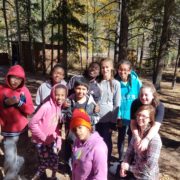
Logan School 1-Match FireThe action-packed day with Environmental Education Teacher Elizabeth Wroe, her students, and three additional chaperones was pretty epic. Amid winter survival skills training, snow fights would spontaneously erupt and then deteriorate into another round of laughter. It became clear early-on that Logan teachers and students share a special bond – and that Cottonwood instructors weren’t immune to being tackled in the snow. This was a great group with which to work – and the Logan School and the Cottonwood Institute were a perfect match.

Logan School QuinzheeThe day included hard skills like quinzhee and trench shelters, fire-starting, and survival kits –but also the less concrete knowledge of winter injuries, survival mentality, and even talk of extirpation –flew by in a blur. The students and staff were enthusiastic, positive, super-interested, and a real pleasure to work with – not to mention experts at melting snow for water before the instructors even arrived. And all that in the midst of hauling gear around at altitude, in two feet of snow, with cold temps. Everyone certainly worked hard – and played harder.

It was a real pleasure to work with this group. After all, it’s hard not to have fun when you’re playing ‘Ninja’ or dancing like a penguin in knee-deep snow with two dozen other people.  Many thanks to the Logan School for our continued collaboration on great courses! For more images from the course see this link.

Written by Cottonwood Institute Instructor Doug Hill

Highlights from the 2011 Annual Report

July 31, 2012 by  
Filed under Cottonwood Institute News

I really get fired up about our work because we are addressing two really important issues in our community:

  1. So many kids along the Front Range see the mountains every day and either never have been to the mountains, don’t have access to the outdoors in terms of gear or transportation, or don’t have positive role models that recreate outdoors. We believe that we can’t expect kids to care about the environment until we give them an opportunity to explore the outdoors.
  2. So many kids see local environmental issues affecting their communities, but don’t know how to help or think the problems are too complex for one person to do anything about. We believe that every student has the power to be a changemaker to do something positive to address the issues that they are passionate about in their community.

To address these issues, the Cottonwood Institute collaborates with schools and youth organizations in the Front Range to put together fun and engaging programs that connect kids to the outdoors and empower them to tackle local environmental issues to help improve their schools, the community, and the environment through our high quality, high impact environmental education and service-learning curriculum.

2011 has been a phenomenal year in terms of the new partnerships we have created, the students we have impacted, and the projects students have addressed in their communities. We are getting kids outside, inspiring students to become leaders, problem solvers, critical thinkers, and engaged in their community instead of sitting on the sidelines and feeling powerless.

Here are a few successes from 2011:

  1. CI served over 350 youth, over 1,200 total participants, delivered over 13,000 program contact hours, and completed over 6,000 environmental service project hours through its educational programs, outreach programs, and volunteer projects.
  2. CI students were the recipients of the 2011 National Environmental Education Foundation Green Prize and received $10,000 to continue the sustainability initiatives they pioneered at their public school.
  3. Cottonwood Institute works primarily with schools and community groups that serve low-income students. While individual demographics vary based on each specific project, overall, 65% of our students were eligible for free or reduced lunch, and indicator of poverty.

To download a full copy of the report, including information about our Top 5 Programming Stories, New Partnerships, Testimonials, Demographics, Program Evaluation Data, Financials, and Top Supporters, Click Here.

The Cottonwood Institute would like to thank all of our students, parents, staff, instructors, board members, educational partners, donors, supporters, and cheerleaders for making 2011 such a success!

Sincerely,


Ford Church, M.A. Founder and Executive Director
Cottonwood Institute

Lakewood High School Students Change Their World

June 13, 2012 by  
Filed under Cottonwood Institute News

Eight months ago, Cottonwood Institute embarked on a new journey, Mini CAP, with a group of sophomores from FAST Tracks, a dropout prevention program at Lakewood High School. Mini CAP is a spin off of our core curriculum at New Vista High School in Boulder, the Community Adventure Program.  We took our CAP curriculum and revamped it into a mini curriculum to include all of our core components including a student led action project and outdoor skills.  By doing this we are able to connect more kids to the outdoors empowering them to discover their reason for caring about the environment.  Students met twice a week during the 2011/2012 school year with a Cottonwood Institute instructor and embarked on many adventures throughout the year.

————

We started with a question: Can one person change the world? At the beginning of this course the majority of the students  simply said no because it takes more than one person and left it at that. But at the end of the course – 7 months later – there came a deeper understanding of the same question.  One student summed it up well, “I know I can change the world. But I also know I can’t do it by myself.”


This realization did not come easy. We worked through sarcastic comments, pessimistic thoughts, and even behavioral challenges getting to that point. We read stories, watched movies, hosted guests, wrote poems, played games, went on field trips, participated in team-building and nature awareness activities, learned survival skills, discussed controversial topics, wrote in journals, learned about environmental issues, and completed an action project around water conservation and pollution.

While we started with only a question, we moved rapidly into personal skills and team-building and then put these to the test on our first field trip to tromp through the snow near Conifer where we built a quinzhee snow shelter and had an epic snowball battle.  Taking the outdoor skills we learned back into the classroom, we worked more on understanding environmental issues and why we should care about these issues.  From there we began to formulate our own ideas and interests leading us into our action project.

After hosting guest speakers on a variety of topics from school environmental clubs to water education, we chose to focus our efforts on water conservation and pollution. This involved everything from tracking our water usage for a week, studying other countries’ usage, playing a water relay race, and creating awareness posters on conserving water, bringing us to our culminating project: working with the City of Lakewood Parks and Recreation to continue their cleanup efforts at Main Reservoir, one of 3 reservoirs for the city of Lakewood.  We also toured Marston Water Treatment Plant, giving us a more complete understanding of  how water is processed to ensure safe drinking water.  This entire process, from education to awareness to action, provided a circle of understanding as to why conserving and caring for our water is important for the safety of not only our community, but for the world.

Some may see cleanup projects and posters as mundane work, but in the word of one student, “Yes, I can change the world. Cleaning the park as a class made the park cleaner.  There might still have been some trash, but that’s one less animal that may die from [pollution].”  I recently heard a story about a man throwing starfish back into the sea as they wash up on shore from the tide and another man says that there are too many starfish washing up on shore to make a difference.  The first man then replies, as he tosses yet another starfish back into the sea, “Made a difference to that one.”

We fought pessimism through the entire course as many of the students see the world and themselves as being selfish. While this was difficult to work through, it was rewarding for all when we broke through this cloud and realized that we can only do what we can do and by our actions, others may follow in our steps.  We talked a lot about motivation and inspiration and what makes people take action and while these students may or may not be the next movers and shakers of the world, they will move and shake you. Their words and actions are quite powerful.  This is what inspires them:

“People that have nothing in life and they find a way to make it.”

“What inspires me is family, friends, and situations in general. And I want a good future. That’s inspiration!”

“My family inspires me because they are always telling me that I can do anything if set my mind to it because anything is possible.”

With inspiration and support like this, watch out world, these kids are going to create change! And with additional support from programs such as Mini CAP, devoted educators, and adult and peer mentors, the change they create will be welcomed by all.  What do you think:  Can one person change the world?

I will leave you with this poem from a student, and then ask yourself one more question: Is it worth it?

  • I AM…a talker and keep to myself
  • I WONDER…what can I do to change things in my life
  • I WANT…to help
  • I AM…only one person who tries to help
  • I FEEL…helping people makes me feel better
  • I WORRY…when my family worries
  • I CRY…when my family struggles or when there is no end in sight
  • I SMILE…when the people I care for smile
  • I AM…optimistic
  • I DREAM…of a better world for my family
  • I TRY…to see the world in a different point of view
  • I HOPE…that one day my family will be happy
  • I AM…an outgoing person

————

A huge shout out to all those that made this program possible: Cottonwood Institute, Wildland Education Awareness Institute for use of its land, Shane Wright of Groundwork Denver, Cottonwood Institute’s Earth Task Force, City of Lakewood Parks and Recreation, Denver Water, Alan Polonsky of City of Denver Department of Environmental Health, and J.D. Prater of Alliance for Climate Education (ACE). A special thanks goes out to both Lakewood High School and teacher extraordinaire, Mr. Robert Giusto!  You rock!

Click here for a slideshow of all the adventures we had throughout the year!


Overnights and Action with CAP

CAP students were quite busy this quarter. Before their first overnight they learned about camp setup, packing their bags, proper camp nutrition, and basic outdoor overnight essentials.  Most of them already had a great deal of camping experience for high schoolers. Or so they said, as they arrived for the overnight with overstuffed backpacks – everything but the kitchen sink!  And so the adventures began…

…And continued.  Although it started heavily snowing, everyone was in good spirits through spreading mulch, going on a night hike, learning about fox walking, setting up a bear hang, and working as a group. Even though they were exhausted and wet, by the time CAP left their first overnight trip everyone was satisfied and excited for the next one.

The next few weeks students worked on their action project, which was all about transportation and the inefficiency of cars. When they went on field trips CAP students only rode bikes, used the bus, or other forms of alternative transportation to leave a smaller carbon footprint. They walked their walk and talked their talk.

Finally, it was time for the second overnight and more adventures with the weather. This time it was all about the rain. Needless to say their spirits were slightly dampened (pun intended!), but as soon as they set up their tents, ate lunch and built shelters, the sun decided to poke out from behind the clouds, helping to raise spirits a bit. Students played elbow tag for an entire hour. (And for those of you who have never played this game, I leave it up to you to look it up and play – well worth the time!) Feeling energized and satisfied, they headed back camp to hang out and eat dinner. The next morning was sunny and warm, and everyone was sad to leave. As CAP ‘s quarter came to an end, the only disappointment was that time had flown by so quickly, but everyone knew the experience of it all was something that would never be forgetten.

Click here for a slideshow of the adventures!

Written By Juliet Luna and edited by Madeline Bachner and April Pishna.

Earth Task Force Recognized for Green Prize and Receives $10,000 Check!

October 7, 2011 by  
Filed under Earth Task Force

Last February, Earth Task Force (ETF) students and staff, co-wrote a grant application for the National Environmental Education Foundation’s (NEEF) Green Prize Award. The Green Prize is a national contest for schools across the country with a prize of $10,000 to help fund the winning schools’ sustainability efforts.  In 2011, over 100 schools from around the country applied.  New Vista High School’s Earth Task Force, sponsored by the Cottonwood Institute, won this prestigious award!

On Wednesday September 14th, 2011 Jen Taboula, from NEEF; along with New Vista Principal, Kirk Quitter; Boulder Valley School District Superintendent, Bruce Messinger; Ford Church, Cottonwood Institute Executive Director; and the entire New Vista student body helped ETF celebrate their success with a school-wide assembly. During the assembly, NVHS’s sustainability efforts from curriculum to composting were applauded. Jen Taboula lauded the homegrown sustainability efforts of students and staff. “You aren’t sitting in a LEED certified building,” Taboula stated. “What stood out to me is that what you’re doing (is what) students around the country could be doing, regardless of the resources at their schools.”

Taboula also mentioned that the reason NVHS stood out amongst all of the candidates was because of strong student participation and the possibility of replicating the programming elsewhere. A big part of the programming Taboula referred to comes from the Cottonwood Institute’s Community Adventure Program, and the support that Cottonwood Institute gives the Earth Task Force through funding and resources. Truly the winning of this award is the result of strong community partnerships between Cottonwood Institute and NVHS students and staff.

The ETF has implemented dozens of projects, including the installation of solar panels on the school’s roof, all-school lunches made from local ingredients, and alternative transportation programs. The ETF is extremely proud their efforts have paid off, and are excited to put the prize money to good use. They are hoping to use the money to expand the New Vista gardens, put on more events that engage the school, and make more green improvements to the building, such as planting trees or even a green roof!

Click Here to read the article that appeared in the Boulder Daily Camera.

Click Here for a slideshow of the celebration!

This article was written by Gracie Currier-Tate and edited by Paige Doughty. We also want to acknowledge students Kelly Muller and Seth Blum, along with mentor Paige Doughty and teachers Kate Hartman and Andy Stephens for writing the Green Prize grant – way to go!


Academic Resources

October 29, 2008 by  
Filed under Community Adventure Program

Comments Off

The Cottonwood Institute’s educational philosophy is based upon two major tenets: environmental education and service-learning. We wanted to take the opportunity to define these and other pedagogical approaches and techniques used to teach our educational programs. These definitions offer a very broad explanation to complex terms, but attempt to synthesize these key terms into understandable tidbits of information.

Environmental Education – Environmental education incorporates experiential teaching methods to educate students about the natural systems and functions of our planet, issues affecting the natural world, and gives students an opportunity to formulate their own opinions on being active to protect the environment. In the modern and technological age, people have become more disconnected from the rhythms of natural world than any other point in time. “The term ‘nature-deficit disorder’ was coined by author Richard Louv in his book Last Child in the Woods to describe what happens to young people who become disconnected from their natural world. Louv links this lack of nature to some of the most disturbing childhood trends, such as the rises in obesity, attention disorders, and depression.” Source: No Child Left Inside. For information about nature deficit disorder and the No Child Left Inside movement to address this problem, please Click Here. For more information about Environmental Education best practices, please Click Here.

Service-Learning – Service-learning offers a unique approach to community service and volunteering. Community service and volunteering can have a negative connotation because it is often used as a method of punishment when students or citizens get in trouble with the law. Service-learning seeks to link service with a real community need, and promotes civic engagement while having a real application to the curriculum students are learning in the classroom. Waldstein & Reiher (2001) define service-learning as, “a pedagogical approach to education which links community-based service with academic goals through critical reflection” (p. 7). For more information about service-learning, please Click Here.

Experiential Education – Experiential education has three primary components: action, reflection, and transfer. Students learn by engaging in hands on experiences that create new learning. Students then reflect on this new learning to make the experience even more personal. Finally, the students incorporate this new learning into other areas of their lives to complete the “transfer” of knowledge. According to Proudman (1992), “experiential learning combines direct experience that is meaningful to the student with guided reflection and analysis. It is a challenging, active, student-centered process that impels students towards opportunities for taking initiative, responsibility, and decision making” (p. 241). For more information about Experiential Education, please visit the Association for Experiential Education.

Outdoor Education – Outdoor education incorporates experiential teaching methods of action, reflection, and transfer in an outdoor or wilderness setting. Throughout this thesis I will use the terms outdoor education and adventure education synonymously. However, I think that adventure education is representative of a broader category, or umbrella, which encompasses both outdoor and environmental education. Adventure education also incorporates indoor challenge and teambuilding activities, which does not necessarily fit into my paradigm of outdoor education. While there are many opinions about the distinctions of adventure education, outdoor education provides students with an opportunity to develop wilderness skills, awareness and appreciation for the natural world, and offers an opportunity for group development and personal growth through a series of physical and emotional challenges in a supporting environment.

Community – The term community has a multitude of interpretations. Some people define community by their friends and family, by a geographic location, or by a common hobby or trait. For the purpose of this thesis, I view community as a deep relationship that begins with a group of committed individuals – committed to each other and to a common cause. But community goes beyond a small group of committed individuals. Demonstrating a strong sense of community is also defined by active participation in civic, political, and social activities and by actively expanding one’s social networks.

Civic Engagement – Civic engagement refers to how people exercise their duties and responsibilities as citizens and how they are linked to their community. Civic engagement is contingent upon people being actively involved with their community on a variety of levels. According to the report The New Student Politics: The Wingspread Statement on Student Engagement (2002), college students from around the country presented a different perception of civic engagement:

The manner in which we engage in our democracy goes beyond, well beyond, the traditional measurements that statisticians like to measure us by, most notably voting. Indeed, student civic engagement has multiple manifestations including: personal reflection/inner development, thinking, reading, silent protest, dialogue and relationship building, sharing knowledge, project management, and formal organization that brings people together. Cultural and spiritual forms of expression are included here, as are other forms of expression through the arts such as guerrilla theater, music, coffee houses, poetry, and alternative newspapers (p. 1).

Social Capital – The concept of social capital refers to the social connections which members of a community share and can be characterized by social networks, companionship, mutual support, cooperation, trust, fellowship, sympathy, and good will. Social capital is measured by political participation, civic participation, religious participation, connections at school or in the workplace, informal social connections, altruism, volunteering, philanthropy, reciprocity, honesty, and trust (Putnam, 2000). To put it more simply, social capital looks at the social and civic networks of a community and attempts to measure how well individuals, families, and members of a community interact with one another within those networks.