The Buzz from CAP this Quarter!
October 23, 2012 by Madeline Bachner
Filed under About CAP, Action Projects, Community Adventure Program, Cottonwood Institute News
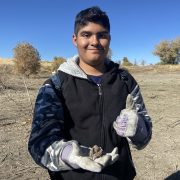
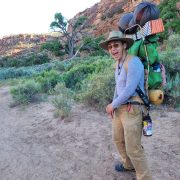
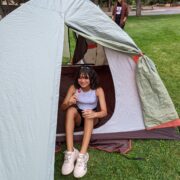
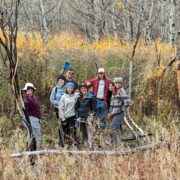
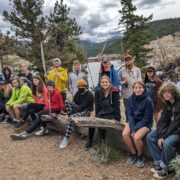
This past quarter of CAP, the class has learned many interesting things. They learned about bees, pollinators, survival skills, and tips on camping. One of the main things CAP focused on was colony collapse disorder (CCD), which is the disappearance of worker honey bees. Another is wilderness survival skills, which is teaching the class how to make it in worst case scenario situations in the wilderness.

The class has recently been working on a mural related to colony collapse disorder (CCD) and has been making flyers to support local beekeeping and to support saving the bees. The causes of CCD are unknown, but many theories connect to a host of issues: parasitic Varroa mites, pesticides and even radiation from mobile phones. The best thing we as individuals can do, is buy local honey and support bee keepers; or even start your own hive.
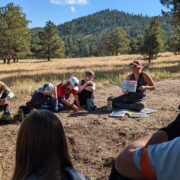
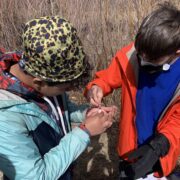
The class has also learned about basic survival skills. In the image to your left you
can see one of the CAP class students making a fire on the overnight trip with the coal made from a bow drill. The class has learned fire skills, how to find/make shelter, how to identify edible plants, how to find and treat water to drink, and simply how to calm down and take a breath. This class has absorbed so much knowledge! The sky is the limit!
Written by: Myra Noble, freshman student at New Vista High School
CAP Explores The Impact of Population Growth
April 1, 2012 by Madeline Bachner
Filed under Action Projects, Community Adventure Program
This quarter CAP students at New Vista High School in Boulder, CO explored the environmental impact of population growth. They researched how overpopulation is affecting Boulder County and came across the following topics: Open Space and Mountain Parks trail usage, food production, water use and treatment facilities, waste management, family planning and population density.
The class created funny characters to discuss these topics in skits, helping students understand the possible severity of this issue. It was a difficult topic to fully grasp and contain in a six week project, but they worked hard and came away with an increased awareness and a desire to delve deeper.
CAP students not only gained an understanding of the overpopulation issue, they also learned more about nature awareness, social change, and interpersonal skills. But don’t let us tell you about that, let the students speak for themselves…
“Now, because of my re-exposure to nature through this class, I value [the Flatirons] and all of nature so much more.” Giselle
“I had fun spending time outside and learning about our planet. I thought the emphasis on movements always starting small and the fact that you CAN do something as just one person was empowering.”
Katia
“Although the things that the class is really set up to teach are environmental issues and survival techniques, I learned much more about just being with people, and working together toward one goal, and being successful with it…” Jake
“I liked the way everyone was connected through the class. I’ve never taken a class and felt that safe with the kids in it. I really liked how most of the things we did, we did in groups. I also think the attunement was a really fun way to unite the class. CAP class taught me a lot of important lessons and teamwork was one of them.” Julien
Click here for a slideshow of the full CAP adventure!
CAP Takes A Bite Out of Healthy Eating
December 20, 2011 by Madeline Bachner
Filed under Action Projects, Community Adventure Program
The Community Adventure Program (CAP) rounded out 2011 with a great project on healthy alternatives to fast food. The students researched and used experience with their peers eating habits to shape a project based on finding healthy and affordable alternatives to the easily accessible fast food chains near the school. CAP students became interested in a few different aspects of eating well: from thinking about waste in restaurants and packaging, to how animals are treated, the distance the food travels to get to your plate, in addition to basic nutrition.
The class had a great resource experience meeting with Whitney Johnson, Whole Foods’ healthy eating specialist and hearing from their meat department. They learned about the ways that animal lifestyles are qualified for meat labeling in the 5-Step Animal Welfare Rating Program. The class toured the different departments of Whole Foods looking for nutrition, less packaging and good deals. They also made delicious and simple black bean humus with Whitney’s assistance. The deli was very kind to the students, providing a late lunch with lots of yummy options and highlighting their new deal of 5 choices for $5 starting this winter.
CAP finished the quarter with a presentation about what they had learned and a plea to their fellow students to be thoughtful about their eating decisions.
The class’ closing remarks from their presentation were as follows:
“We all knew that fast food was bad for us, but we didn’t know what went on behind the scenes. We all live in a time where we’re trying to make a change. What we put into our bodies is a big part of our lives. Know what it is you’re eating. We can’t force you to eat better, but it’s your choice to eat well or eat badly. Keep in mind what’s in the food you’re eating, and how far it’s traveled to get to you. It costs a little more to eat real food, but it’s worth the price.”
A huge thank you to Whitney and Whole Foods for providing us with great resources and ideas!
Part of the Movement to Label GMOs
October 21, 2011 by Madeline Bachner
Filed under Action Projects
The 30th Community Adventure Program (CAP) started off the 2011-2012 school year with an energetic bang! Students took an early interest in Genetically Modified Organisms (GMOs) and that shaped the class as they delved into research and public action!
The pertinence of the topic of GMOs was amazing. The first week of class three students attended a rally at the court house on their own time against GMO’s being planted on public land. The class followed up by writing letters to the County Commissioners objecting to the planting of genetically modified sugar beets on Boulder County Open Space.
CAP also visited the Flatirons Neighborhood Farm to see a working organic garden which produces GMO-free produce for the surrounding neighborhood. Then the students took their knowledge to the streets, educating and asking for petition signatures. According to Katie Maxwell, “It was strange to hear myself teaching others about the things I had only recently learned about, but I loved knowing that now they knew about this huge problem in our country that is so overlooked. If just one of them went home that night and looked up what a GMO was then we succeeded because knowledge was spread.”
The class gathered 141 signatures for the Organic Consumers Association asking for the labeling of genetically modified foods in our grocery stores. Students also announced some of our findings at the Community Gathering at New Vista High School to help educate their peers. As national groups came together around this cause, the class invited the communications director from Alfalfa’s Market into the classroom to talk about their part in spreading the word about labeling GMOs in our food. It was an incredible learning experience for everyone. As Eric Falconer summed it up, “That’s why this class is so awesome, because if you’ve never really been involved in an issue then you get a chance to experience it, and if you have, then you’re just making a greater impact.”
Thank you to everyone involved in making this quarter a great learning experience for everyone!
Check out all the fun and dedication by clicking here for a photo slideshow.
Gardening Made Simple and 100 Ways to Change the World!
June 10, 2011 by Madeline Bachner
Filed under Action Projects, Community Adventure Program
It was a wonderful final quarter with the Community Adventure Program at New Vista High School this spring! The class joined together to create an action project around gardening and the appreciation of simply grown local food. We visited Growing Gardens and the Flatirons Neighborhood Farm to glean some local information from amongst the many knowledgeable folks in Boulder. The class worked hard on the garden transformation: turning the soil, picking out grubs, planning and planting beds, building a raised bed, and finally showing off their hard work with garden tours on Exhibition Day!


“I felt proud to be a high school student when we were working in the garden. I think it’s a rare occurrence to see a bunch of high school kids from all different social groups working together to produce food.” Lauren Harper


“As a group our hands reached deeper into the ground, we started planting, started watering, all of us started growing alongside our young plants. There were moments you could really feel us becoming a group…” AnnaMarie McCorvie
After a great quarter of learning together, we also brainstormed 100 Ways to Change the World! AnnaMarie put it down in writing and this is what they would like to leave us with:
100 Ways to Change the World
Recycle…Join a movement…Start a movement…Have a facebook revolution…March…Protest…Peacefully gather…Become a superhero…Write a book…Build a bike…Build a house…Dig a well…Garden…Plant an indigenous tree…Bike…Go to the farmers market…Write to your congressmen…Blog…Learn about an issue…Educate others…Volunteer…Help a hospital…Cure cancer…Build a windmill…Pick up litter…Clean a river…Compost…Reuse…Reduce waste…Join the Peace Corps…Educate yourself…Graduate…Be a mentor…Be a pen pal…Be an artist…Read…Give to charity…Adopt a child…Use biodiesel…Join a club…Make a friend…Stop and smell the roses…Eat healthy…Pitch an idea…Start a company…Become a doctor… Be passionate…Love thy neighbor…Hug a tree…Live sustainably…. Leave no trace…Visit a national park…Read Shakespeare…Meditate….Practice Yoga…Listen to music…Have an open mind… Have an open heart… Be positive…Vote… Be charitable… Smile… Love yourself…Don’t set off bombs… Save the bees…Eat organic…Hug orphans…Be an ally…Don’t shake a baby… Work with others… Give out free condoms… Don’t use plastic… Be creative… Dance like no one’s watching… Sing like you know the words… Turn the lights off… Take cold showers… Support good organizations… Bring your own grocery bag… Wear sweaters… Open windows… Use public transportation…Play sports… Weed invasive plants… Train your dog… Boycott… Come alive… Use your rights… Sing more… Learn a language… Laugh more… Make your own clothing… Do what you love… Look people in the eye…Use solar panels… Have a green roof… Use a reusable water bottle… Laugh with people… Work hard… Be you
CAP Students Unleash Their Inner Worker Bee
December 21, 2010 by Madeline Bachner
Filed under Action Projects
Community Adventure Program (CAP) students unleashed their inner worker bee this quarter to create a great two-pronged Action Project that focused on honey bees and cold-frames. Based on early class discussions, the plight of the honey bee was a hot topic within this group, which was duly noted. However, they just couldn’t let go of the desire to continue the growth of the pollinator garden by building a cold-frame to help start plants and keep them growing during the colder shoulder seasons. So…….they combined their passions!
They started by educating themselves about what is happening to honey bees. They knew bees were disappearing at an alarming rate, but why? Colony Collapse Disorder (CCD) was at the heart of their research. This is a mysterious problem that causes bees to literally disappear. There are many theories about the causes, everything from pesticides to cell phone use, but there is no one answer. Students conducted research on the web, consulted with Growing Gardens and watched a documentary called “Vanishing of the Bees.” This all came to the same disquieting notion that human activities as a whole are negatively affecting the lives of honey bees! So what can be(e) done?
They found the most simple and pervasive solution, aside from learning the art of beekeeping and starting your own hive, is to support local hives. As they learned from many of their sources, “it’s not about one person with 60,000 hives, it’s about 60,000 people with one hive.” So they set about attracting attention with honey…That’s right, a bake sale! They raised money for their cold-frame and attention to the bees by selling baked goods at school and encouraging the use of local honey to support local bee keepers. It was quite a success and spurred their energy to create a cold-frame to aid in the attraction of bees to their pollinator garden at New Vista High School.
A cold-frame is basically a small green-house that is low to the ground that keeps off the frost on cooler days at the beginning and end of the growing season. It works by trapping the heat of the sun under a window or door that allows access to a small box which contains the plants and the heat. The cold-frame came together quickly with donated and repurposed materials from ReSource in Boulder and friends of students. Just over 6 feet long and 3 feet high, their cold-frame should shelter many starts this spring as they bring their pollinator garden back to life.
Students are hopeful that the local bees will continue to survive and provide pollination for their garden and honey for their hives and a few of their baked goods. The fruit of their labor tastes sweet!
Check out the sweet video the students put together about their project:
This article was written by Madeline Bachner and edited by Ford Church.
S.U.P.E.R. Summit Was Stupendous
December 15, 2010 by Ford Church
Filed under Action Projects, Earth Task Force
The Earth Task Force held their S.U.P.E.R. Summit (Students Understanding Personal Environmental Responsibility) on November 11th, 2010 at Casey Middle School. The Summit attracted over 70 participants and eight different school groups committed to creating environmental change within their high schools and larger community.
Throughout the day the students discussed sustainability goals that have already been successful for them, improvements they’d like to make at their schools, and strategies for creating change. These discussions were held in an open space format, led by the students themselves, which contributed to making the event a truly unique and unforgettable experience.
Through open dialogue and other activities through the day students and their mentors made invaluable connections with other schools and members of the community, which will surely benefit each environmental club in their future endeavors.
Attendees at the S.U.P.E.R. Summit were also provided with community support. Thirteen different community partners volunteered their time and extended their resources to help students with future and current Action Projects.
In addition to the wonderful eight high schools and thirteen community partners in attendance, the Earth Task Force was also honored to have Boulder County Commissioner, Will Toor, BVSD’s Assistant Superintendent, Joe Sleeper, and President of the BVSD Board of Education, Ken Roberge attend the summit.
Other highlights included the ever-inspiring climate change presentation by Amy Atkins from the Alliance for Climate Education and a delicious lunch donated by Chipotle and Sunflower Market.
Overall this event was a great success! The creative ideas that developed during the summit were impressive. We look forward to seeing the outcome of all the passionate students who attended the event. After meeting so many passionate, inspired people of all ages, we expect nothing but brilliance from this group of leaders.
This summit goes to show that when you come together as a community there is not limit as to what can be achieved.
For a link to pictures from the event, Click Here (Thanks ACE!)
To download a copy of the Open Space Discussion Notes, Click Here.
Stay tuned for a video about the event coming soon…
The Summit was sponsored by the Cottonwood Institute’s Earth Task Force, The Alliance For Climate Education, New Vista High School, and BVSD Office of Sustainability.
This article was written by Marissa Bramlett and edited by Paige Doughty.
Transportation Transformation
December 14, 2010 by Ford Church
Filed under Action Projects, Earth Task Force
In previous years, the Earth Task Force has designated certain months as “alternative transportation” months. During this time we encouraged students and faculty to alternatively transport themselves to and from school. As an incentive, we recorded participation and invited those who participated frequently to a pizza party where we held a raffle.
This year, because of an increase in Earth Task Force members, we decided to create a new system that encouraged alternative transportation. We instituted a stamp-card based system similar to ones at local coffee shops and restaurants. Each time students alternatively transport themselves to school, they receive one stamp. Once they get enough stamps they can redeem them for a prize.
So far, the program has been awesome! We’ve had tons of participation and we hear kids say great things about us in the hallways. In fact, the program has been so successful that we’ve struggled to keep up with the high demands. We’ve had to get more creative with the rewards we give out. We gave out school-related prizes like, New Vista High School apparel, free yearbooks, and prom passes and we baked cookies as rewards. In all, this program has been a fantastic contribution to the New Vista community and we hope to build on its success.
This article was written by Aaron Fox and Zander Deetz and edited by Ford Church
Students Dive In Deep To Tackle The Water Quality Of Boulder Creek
October 11, 2010 by Madeline Bachner
Filed under Action Projects, Community Adventure Program
After much discussion and many good ideas, Community Adventure Program (CAP) students decided to dive in deep to tackle the water quality of Boulder Creek. As a central part of downtown Boulder, the class thought it was unfortunate that there was visible trash around the creek constantly, so they decided to do something about it!
Why Boulder Creek? Here are some of their values and the reasons they chose this project:
Water is the most important resource.
We want Boulder to live up to its’ name of being environmentally friendly.
We want to preserve the wildlife around Boulder creek and every living thing affected by Boulder Creek.
We want to be able to help a place we all go and enjoy in our lives.
We don’t want the people downstream to be affected because of what other people do further up stream.
Water is all a huge cycle and if it gets polluted some place, it can affect billions more gallons of water farther on.
The environment is important.
Fish are cool.
We want to make some sort of difference in our community.
It is one of our favorite places to chill.
We want better habitat for wildlife and we want to help make better experiences for anyone who visits Boulder Creek.
To get started students researched facts about Boulder Creek and water pollution. They found plenty of information and shaped it into a power point presentation to help educate other students at New Vista High School. Some findings were pretty grim; such as the fact that fish gender is being changed by some chemicals in the creek. Other information gave them hope for the health of Boulder Creek, including the number of bird species found around the creek. In addition, they discovered that a lot of work has been done to maintain healthy stream flow, such as the rows of boulders set across the creek to create pools and riffles.
Students found that a major factor with creek pollution are the storm drains that bring water into the creek from sites all over town. In order to help mitigate the pollution in the runoff, CAP participated in the Keep It Clean Partnership Campaign by adding stickers to storm drains. They added stickers to over 20 storm drains in the neighborhoods west of New Vista High School.
In order to increase awareness, students also created their own posters about keeping the creek clean and free of garbage. In their final effort to maintain the health of Boulder Creek CAP students donned rubber gloves spent the afternoon filling 7 trash bags with garbage removed from the creek!
The class was proud of their efforts and excited to be part of making a difference in the Boulder Community. They learned a lot and had fun working together!
Food Miles
August 23, 2010 by Ford Church
Filed under Action Projects
“If every US citizen ate just one meal a week composed of locally and organically raised meats and produce, we would reduce our country’s oil consumption by over 1.1 million barrels of oil every week.” This statistic from Barbara Kingsolver’s Animal, Vegetable, Miracle inspired 4th quarter Community Adventure Program students at New Vista High School to examine the environmental impact of food miles.
After researching more about food miles, students wanted to increase an awareness about this issue at their school. They volunteered at Flatirons Neighborhood Farm and Growing Gardens to get tomato plants and worked with a member from Square Foot Gardens to plant square foot tomato plots in the New Vista High School community garden.
To help increase an awareness about food miles at their school, students created educational displays about how to buy foods “in season” and prepared an amazing multimedia presentation for their whole school called, “The Imported Food Blues.” Overall they reached over 300 students, teachers, and staff members through their efforts.
According to one student in the class, “we made a difference in our community. We rose above and saw what the actual problem was and how it broke down into many problems. I have started to recycle everything that I possibly can. I ride the bus to school and ride my bike to the bus stop. I never use Styrofoam, ever. All these are small steps, but if I continue with these steps, a difference will be made. I hope to continue being environmentally friendly and to use what I have learned in this class to help show other people how to make a difference in the future. CAP helped me learn that we need to be aware and that we need to change in positive ways. I hope to take this class again and again. I also hope to go on my own camping trips and use the skills I have learned. CAP was a life-changing experience for me.”
To check out a slide show of this class, including awesome pictures from their overnight camping trips, Click Here.