

Student-Led Learning Allowed Angevine Middle School Students to Follow their Curiosity, Learn from Community Experts, and Create Lasting Environmental Change on their Campus
Written by Angevine Middle School CAP Instructor Sara Grillo. This semester, students in the Community Adventure Program (CAP) at Angevine Middle School took ownership of their learning in a way that made every lesson more meaningful. Rather than following a predetermined curriculum, student-led learning helped shape the direction of the class by choosing the environmental and community topics they wanted to explore most.
Their curiosity led us down a variety of fascinating paths. Throughout the semester, students dove into discussions about hunting and wildlife management, electric vehicles and sustainable transportation, animal welfare, wildlife habitat conservation, and much more. By allowing students to guide much of the curriculum, we created opportunities for them to ask their own questions, explore multiple perspectives, and connect their learning to the issues they care about most.
 While we couldn’t always take field trips to every place students wanted to explore, we found another way to bring those experiences into the classroom. Throughout the semester, students learned directly from guest speakers and community experts who shared their knowledge, experiences, and perspectives. Representatives from Colorado Parks and Wildlife, traditional hunters, CSU Extension and CSU Energy Institute, Luvin’ Arms Animal Sanctuary, Xcel Energy, Drive Clean Colorado, and other local partners helped students deepen their understanding of complex environmental topics and exposed them to a wide range of careers, viewpoints, and lived experiences. These conversations encouraged students to ask questions, challenge assumptions, and recognize that environmental issues are often complex, requiring thoughtful consideration of many different perspectives.
Alongside these conversations, students spent the semester building the outdoor skills that are central to CAP. During our winter field day, students worked together to construct a quinzee snow shelter (read more about this here). Throughout the spring, they practiced setting up tarps and shelters, learned about the Ten Essentials for outdoor travel, developed wilderness survival skills, and prepared for their overnight outdoor adventure (read more about this here). Each lesson helped build confidence and a stronger connection to the outdoors.
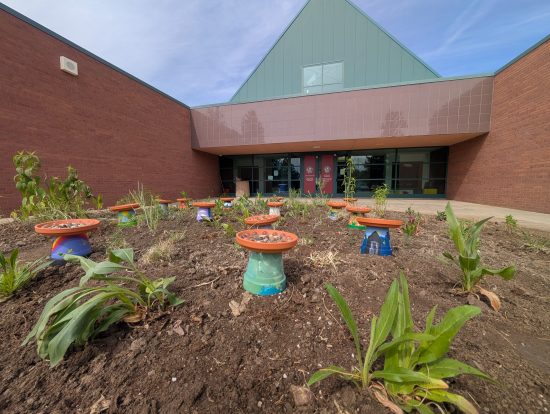
The most exciting part of the semester, however, was the opportunity for students to put their learning into action. As the culmination of their learning, students chose to take on a project that would leave a lasting impact on their school community: transforming one of Angevine’s outdoor planters into a native pollinator and wildlife habitat garden.
 The project began with hard work. Students rolled up their sleeves and removed an invasive ribbon grass that had overtaken the space. Once the area was cleared, they prepared the planter for new life and worked alongside volunteers to install more than 200 native plants chosen specifically to support pollinators, birds, and other wildlife.
To make the habitat even more welcoming, students built bee baths to provide pollinators with a safe source of water and installed bird feeders during spring migration to help traveling birds refuel on their journeys. They also recruited volunteers to help care for the garden throughout the hottest months of the year, ensuring that their hard work would continue to thrive long after the school year ended.
What makes this project especially meaningful is how many people came together to make it possible. Friends of Coal Creek provided invaluable support by helping students plan and install the garden while donating more than 200 native plants. Horizons Landscaping generously donated topsoil for the project. Community volunteers, family members, and supporters showed up ready to weed, dig, plant, water, and encourage students every step of the way.
The garden stands as a reminder that meaningful change often starts small: a group of students identifying a problem, imagining a solution, and working together to make it happen. What began as a classroom project has become a living habitat that will provide food, shelter, and resources for pollinators and birds while creating a beautiful outdoor learning space for future students.
 Most importantly, this project reflects what CAP is all about. Students spent the semester exploring issues they cared about, building outdoor skills, learning from experts, and strengthening their connection to the natural world.
A big thanks to the funders and supporters that make the CAP class possible, including: Enterprise Holdings Foundation, Great Outdoors Colorado, Patagonia, PeyBack Foundation, Strear Family Foundation, Thorne Nature Experience, Tony Grampsas Youth Services Program and the Xcel Energy Foundation.
If you’re passionate about student-led learning and helping students create change in their communities, please consider making a donation or becoming a monthly donor! You’ll help invest in our students, programs, and long-term sustainability and success!
