
 What a difference a few weeks made for the children of Casa de la Esperanza! The Cottonwood Institute worked with Casa youth between the ages of eight to twelve years old once a week this spring to explore the natural world, learn about local environmental issues, and take action to tackle an issue affecting their small, tight-knit residential community of agricultural families in Longmont, CO.
This spring’s mini-Community Adventure Program (a.k.a. “Mini-CAP”) started off with unexpected spring snow storms just before or during each of their Tuesday classes, but they were still able to get outside every time for a little while. That’s when they really brightened up and became engaged. While taking a stroll around a little parcel of undeveloped land early on in the course, they noticed an abundance of garbage floating in the local water drainage ditch. They became inspired to do something about it and spent the next few classes watching videos and studying up on water quality issues in Colorado.
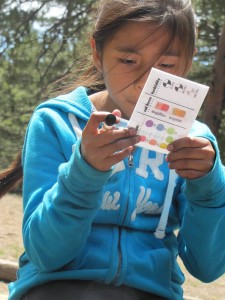 Casa students decided to team up with the Keep it Clean Partnership, which works with storm water pollution prevention across Boulder County and the neighboring cities. They were able to provide clear information for the students on the issue, and easy tips for how Casa de la Esperanza residents can help keep toxins from running off in to their water supplies. The students worked together to bring in materials to make informative posters on the subject, a project which they approached with enthusiasm and focus. Some of the students even worked on their posters during the week, and brought them to class the next week full of color and obvious care for the cause. The posters are now displayed in the Casa de la Esperanza community building and the Longmont Public Library.
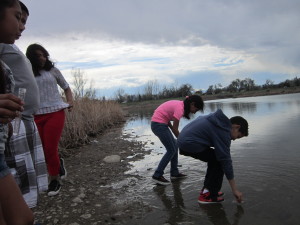
On the final day of class, the students were able to borrow a simple water testing kit from Keep it Clean, and test some local water with it. They took a field trip out to the Boulder County Fairgrounds, a small, local open space with trails and a large lake. They delighted in watching the Canadian geese and skipping stones on the water after they had filled up test tubes and dropped tablets in them to measure the concentrations of dissolved oxygen, nitrate, phosphorus, sediment, and the pH of the water. They found the water to have slightly low levels of nitrate and low oxygen saturation levels, but other than that, it was fairly healthy for aquatic life. The data was returned to Keep it Clean for their records.
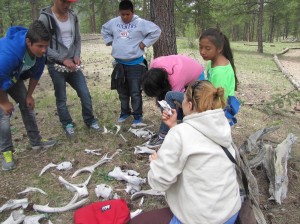 The overnight camping trip was the highlight of the experience for them. Their curious minds and abundant energy thrived in the expansive parcel of land where Cal-Wood Education Center generously let the students camp and explore for the weekend. The students witnessed coyotes, deer, rodents, insects, an even a bear from afar! They hiked “further than they’ve ever hiked before” to a glimmering, abandoned Mica mine, played games to heighten their awareness of the natural world, learned several different ways to make a safe fire, and discovered bones, bird nests, and even a detached squirrel tail. As is the case for most of today’s youth, it was clearly difficult for them to give up the use of cell phones and electronics for the trip, but they bravely embraced the experience so far from their comfort zone. Even though it was tiring, the students reported feeling good after the long hike, and wanted to hike more the next day. All of the students said that they learned a lot, enjoyed the experience, and would love to take their families out camping in the near future.
To check out a slide show of their experience, Click Here.
 This incredible experience would not have been possible without the generous funding of the Brett Family Foundation, Community Foundation Serving Boulder County, The North Face Explore Fund, and the enthusiasm of the Casa de la Esperanza youth, of course!
This article was written by Sandy Chervenak, Cottonwood Institute Instructor.
