
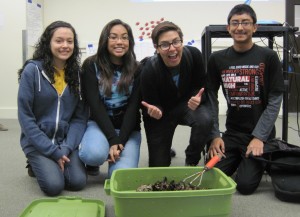
 Within the first couple weeks of their Cottonwood Institute Mini-CAP class, students at STRIVE Prep Excel decided they were frustrated with the closed system of food in their community. They saw heaps of wasted food and food scraps and started to cultivate a passion and motivation to tackle this issue.
Their first step was to research the broad topic of food waste. Following the classic waste hierarchy of reduce, reuse, recycle, the students began to understand the importance of reduction: only put what you can eat on your plate. They also saw the value of saving leftovers to eat later or incorporate in a new meal, rather than simply throwing them in the trash. The students were especially excited to explore the idea of recycling food. To guide their Action Project, the class wrote the following Statement of Purpose:
We are learning how to create and maintain a healthy and productive environment by recycling food waste and sustaining local gardens. We seek to encourage community participation and increase environmental awareness through education, action, and outreach.
Through additional research and guest speakers from the local northwest Denver community, the students decided that vermicomposting (composting with worms) would be the best fit for their school. Gaining momentum, they acquired a bin and worms from Denver Urban Gardens to pilot their composting project. They added food scraps and soil to get it started, and watched the 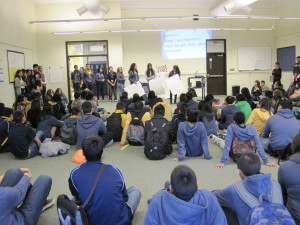 worms excitedly dig around their new home. Once the food scraps turn to compost, the students plan to add the compost to the community gardens at both North High School and Valdez Elementary School located next door to STRIVE Excel’s campus.
Once they established their vermicomposting bin, the students began focusing their efforts on educating the school community, by first extensively educating themselves. They invited Matthew Celesta from Waste Farmers to discuss vermicomposting with a focus on soil science. Through an entertaining presentation, Matthew shed light on the role of carbon, nitrogen, water, and oxygen in the decomposition process. He excitedly compared soil science to a “Hunger Games” battle, giving a students a new way to think about all the microbes involved in composting! Matthew also helped the students brainstorm ways of tracking the health of their compost. For example, students learned that the worms should be spread out in the compost pile because they are sensitive to moisture and temperature. If the worms are clumped together, that means the worms are stressed out and the moisture and/or temperature of the pile needs to be adjusted.
With a wealth of composting knowledge, the students put together a presentation for their entire school at Morning Meeting. This was the school’s first student-led school-wide meeting! Beginning with an overview of Mini-CAP and their camping trip at Camp Wondervu, 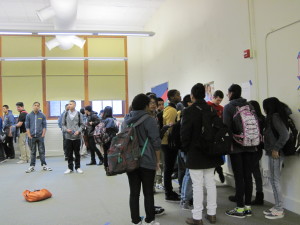 the students focused most of their presentation on the “Who, What, When, Where, Why, How” of vermicomposting at their school. Their presentation was complete with a PowerPoint, videos, pictures, and even a hand-on interactive activity for the entire school! Cottonwood Institute is so proud of the Mini-CAP students at STRIVE Prep Excel, and excited to see how their composting project continues and expands in the future.
Click here to see more pictures from their camping trip and Action Project.
A special thanks to our partners for making this project possible: STRIVE Preparatory Schools, Denver Urban Gardens, and Waste Farmers.
