
Escrito en español más abajo.
Written by Cottonwood Institute instructor Carly Winner. See more photos here!
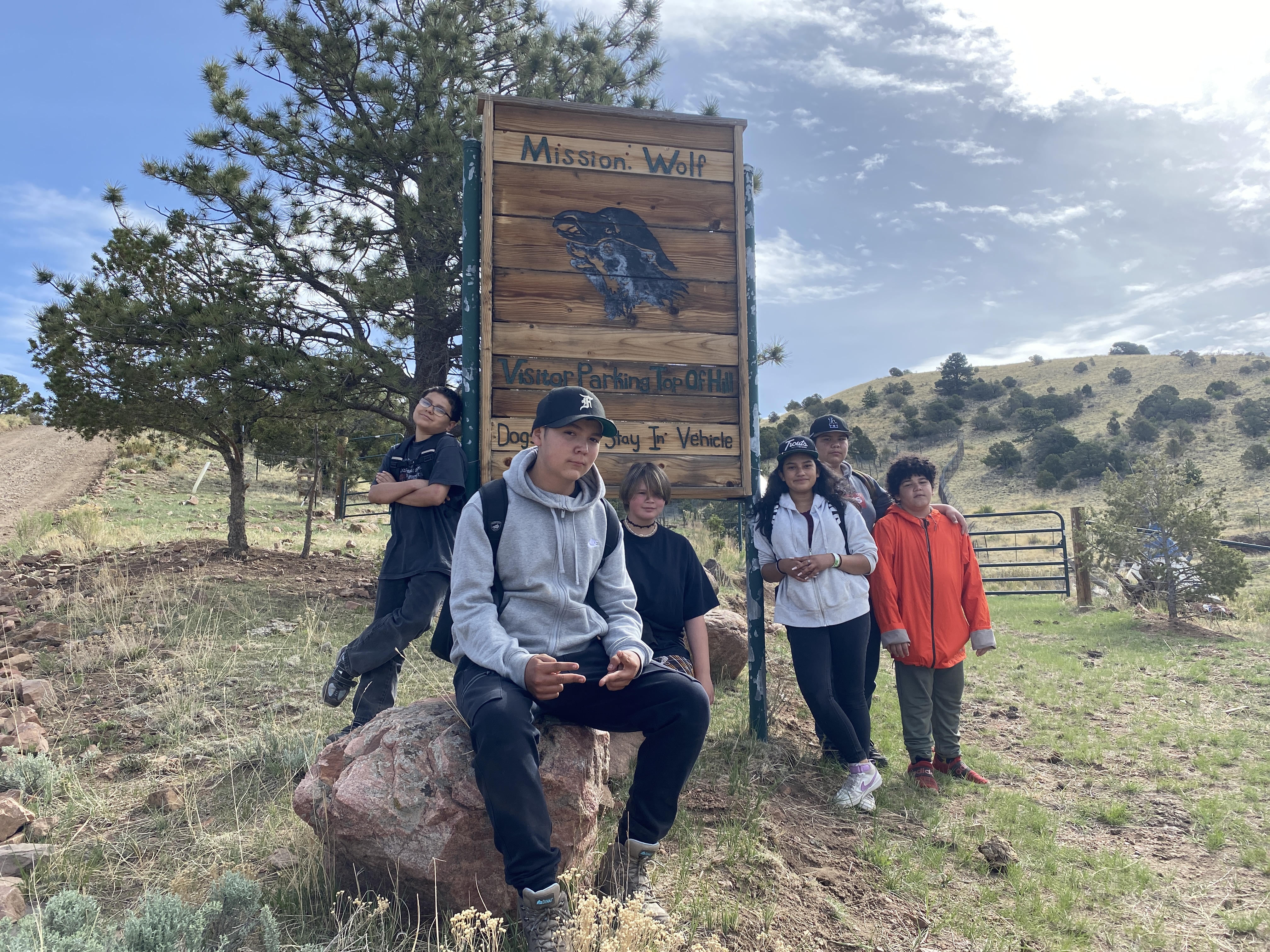
Cottonwood Institute was thrilled to be able to partner with STRIVE Prep Sunnyside again this year on a summer expedition to Mission:Wolf, a non-profit educational wolf sanctuary in the remote Sangre de Cristo mountains. These middle schoolers were kind, thoughtful, inquisitive, and FUN!
Upon arrival, the group was greeted by the fascinating sounds of howls from wolves and smiling faces from staff members. Christian, our Mission:Wolf point person for the trip, gave the group a tour of the site. We were impressed by the large amounts of space; attention to sustainability through gardening, greenhouses, solar panels, and water recycling technology; and the pure beauty of the mountains surrounding us. During our tour, it was essential that the group learned the signature Mission:Wolf game, hacky sack. Why hacky sack, you may ask? The staff explained that most competitive games with high amounts of movement can scare the wolves. Due to its collaborative nature, lack of movement beyond the circle, and low volume, hacky sack is the perfect game to play around the wolves. Hacky sack would prove to be an essential part of our trip and our group slowly improved over time.
After the tour and orientation to our site, we still had plenty to do and learn. We found our campsite down the hill from Mission:Wolf and learned all the wilderness camping essentials, including how to find the perfect tent spot; set up their tent; ways to protect the land from our impact (staying on trail, picking up trash, and properly using the bathroom); and animal safety. Of course, we learned these lessons in rather funny ways, like a relay where the students learned to dig catholes and how to use them. We talked a lot about putting toiletries and food (anything with a scent) in the van, and how the camping triangle to ensure food is away from the sleeping area. After a jam-packed day of learning, THE LEARNING CONTINUED as it was time for dinner! The group had their first opportunity to practice cooking on the camp stoves and backcountry cleaning systems. With full bellies and smiling faces, it was time to fall asleep to the sound of howling wolves.
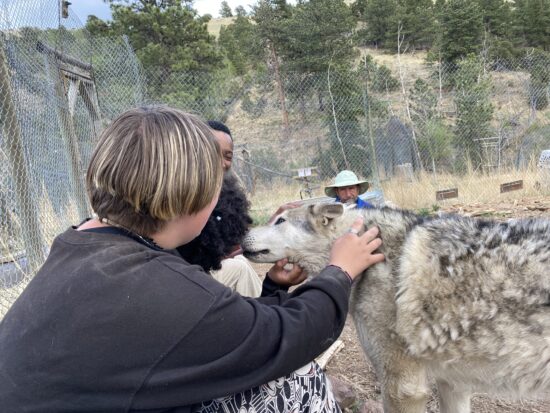
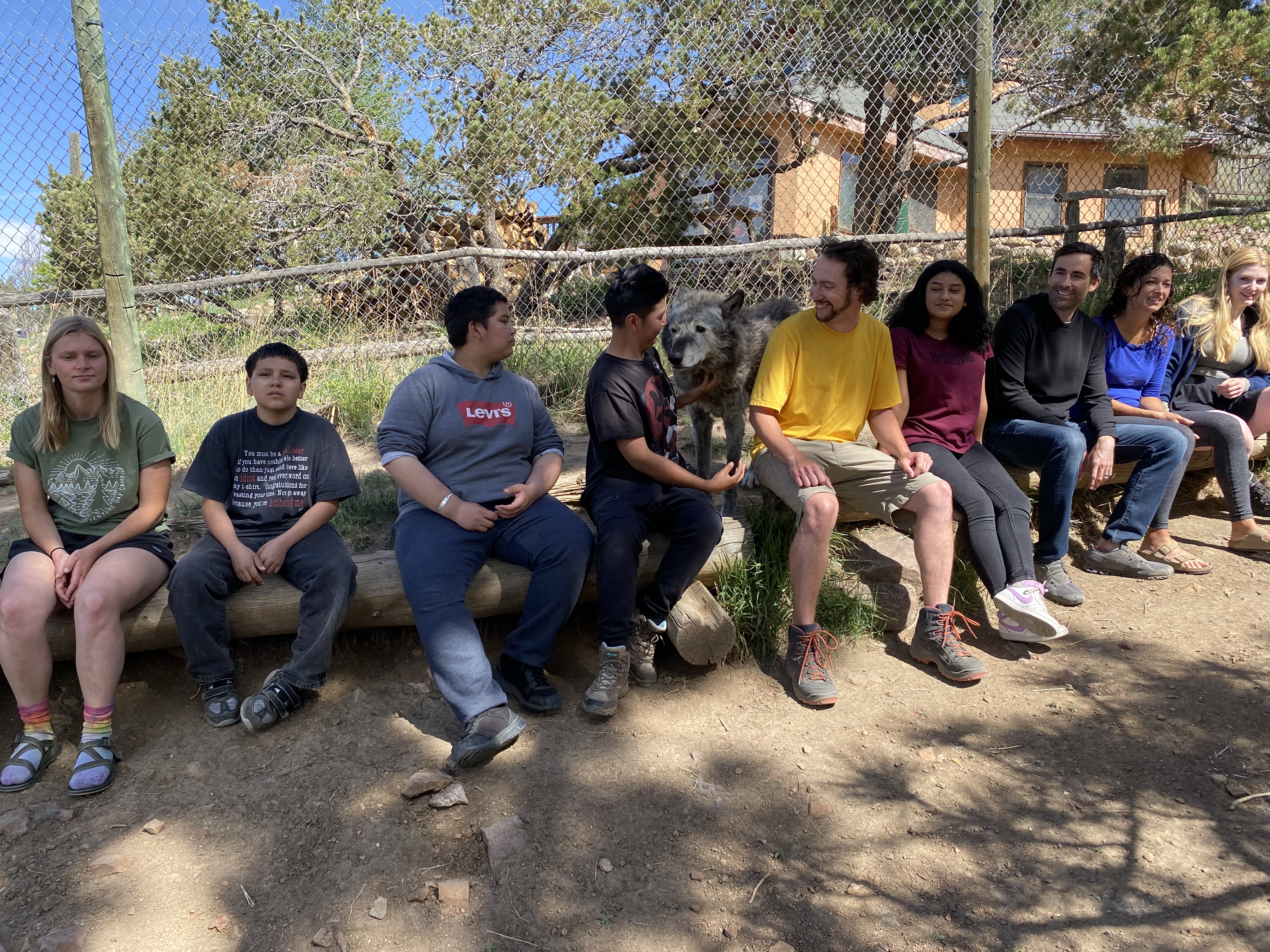
Sunday is an exciting day at Mission: Wolf as it is feeding day! After breakfast at the campsite, we met Kent, the executive director and co-founder of Mission:Wolf. He has spent the past three decades as an experiential educator working to provide a home for rescued animals. Kent used his magical story-telling powers to teach us about his history, the way wolves interact and survive, and how to properly interact with wolves as humans. Kent took us to meet the ambassador wolves Zeab and Cephira. Students confidently strutted into the wolf enclosure not making eye contact, as Kent directed, until sitting down. After sitting down, students put their hands out to signal they were attempting to make contact with the wolves. Kent explained that wolves say hello through sniffing your teeth and determining you are safe. Several students gave the wolves a grunt with their teeth to allow the wolves to sniff them. If the wolf determined you were safe, they may even begin to sniff or lick your teeth. To some, it may sound odd, however, it is the natural wolf greeting and it is very special! Many students were lucky enough to gain the trust of the wolves and to have received a gentle hello greeting with either a sniff or a lick. After meeting Zeab and Cephira, the students were excited to witness the feeding and to see other wolves. Christian, our point person, explained how wolves digest the nutrients in food throughout several days which is why they naturally do not eat every day. The feeding was an exhilarating experience for students and taught them a great deal about how animals eat and sustain themselves in the wild. After a busy morning with wolves, it was time to get to work!
 As Mission:Wolf is primarily volunteer-led, visitors support projects that help Mission:Wolf function. On our trip, the group participated in several projects, including painting steel beams to be used in their new barn and creating a set of stairs to lead up to the campsite at their new education site. They were determined to finish and would continue their project tomorrow, but needed to fuel up on dinner! After learning to cook yesterday, the group felt confident in making tonight’s dinner and enjoyed a feast before circling around to reflect on our day.
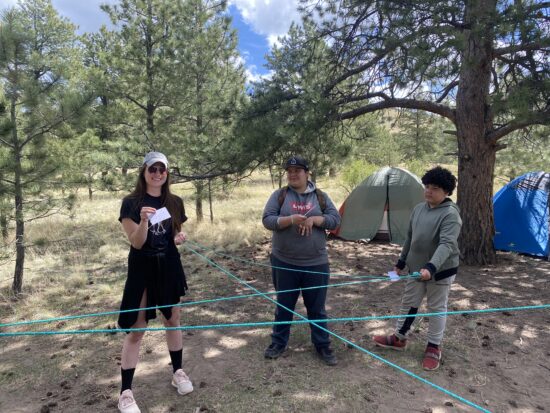
After an extremely busy day for both the group and the wolves, we took the morning to learn new skills at the campsite, while the wolves took time to wake up from their food coma after such a large meal! The group broke off into smaller groups to learn map and compass skills and whittling. We put their new skills to the test through a Navigation Challenge, where teams used a compass to find their hidden food, water, and shelter resources they would need to be able to survive in the game. After learning basic survival needs, the group began to learn about animal interactions and food webs within our ecosystem, including how wolves fit into the ecosystem. Are wolves a part of the ecosystem in Colorado? This question was left unanswered as the group learned about the past, present, and future of wolves in Colorado. As students pondered the question, they thought about how wolves would interact with other animals if they were currently in our ecosystem. We talked about how predators and prey interact, and students learned the game camouflage and proved to be masters. Students hid in the tall grasses and crept up on their “prey” for a successful hunt!
Before we knew it, it was afternoon and we needed to continue working on our service projects! With great perseverance and dedication, the groups made a lot of progress and were excited to have “left their mark” on Mission:Wolf. Before dinner, the group got to participate in a special wolf visit before the sun set. The group started by meeting two wolves, Flash and Nashira. These wolves were extremely friendly and gave amazing hellos to a lot of students. After, Kent wanted to say hello to a shyer wolf. One student at a time, each person got to say hello to Eden. As Eden is shyer, the Mission:Wolf staff is still researching what behaviors and personalities Eden gets along with best. Eden said hello to a few people in the group and Kent found that to be a success! The group got to watch these three wolves adventure around their enclosure, running, saying hello, finding things to play with, and more. With night approaching, it was an extremely special experience to spend time with these wolves. Before the sun set, the group ate dinner and enjoyed our last nighttime circle together.
On our last morning, students practiced taking down tents and getting their gear together. Before leaving the campsite, the group participated in one last sit spot. They reflected on their extra special experience while listening to the wind and insects. We parted ways with our campsite and ventured up to the Mission:Wolf base for one last time.
As the van rolled off the Mission:Wolf property towards Denver, we said goodbye to Zeab, Cephira, Flash, Nashira, Eden, all the other wolves, the Mission: Wolf staff, the campsite,and the Sangre de Cristo mountains. Students bonded with several different wolves, learned about wolf behavior, played amazing games, and shared laughs as a group.
Thank you STRIVE Prep Sunnyside for an amazing adventure!
 Cottonwood Institute estuvo encantado de poder asociarse con STRIVE Prep Sunnyside de nuevo este año en una expedición de verano a Mission:Wolf, un santuario educativo de lobos sin ánimo de lucro en las remotas montañas Sangre de Cristo. ¡Estos alumnos de secundaria fueron amables, atentos, curiosos y divertidos!
Al llegar, el grupo fue recibido por los fascinantes sonidos de los aullidos de los lobos y las caras sonrientes de los miembros del personal. Christian, nuestra persona de contacto de Mission:Wolf para el viaje, dio al grupo un recorrido por el lugar. Nos impresionó la gran cantidad de espacio; la atención a la sostenibilidad a través de la jardinería, los invernaderos, los paneles solares y la tecnología de reciclaje de agua; y la belleza pura de las montañas que nos rodeaban. Durante nuestra visita, fue esencial que el grupo aprendiera el juego característico de Mission:Wolf, el hacky sack. ¿Por qué el hacky sack? El personal nos explicó que la mayoría de los juegos competitivos con gran cantidad de movimiento pueden asustar a los lobos. Debido a su naturaleza colaborativa, a la falta de movimiento más allá del círculo y al bajo volumen, el hacky sack es el juego perfecto para jugar cerca a los lobos. El hacky sack resultó ser una parte esencial de nuestro viaje y nuestro grupo fue mejorando poco a poco.
Después de la visita y la inducción al sitio, todavía teníamos mucho que hacer y aprender. Encontramos nuestro lugar de acampada en la colina de Mission:Wolf y aprendimos todo lo esencial para acampar en la naturaleza, incluyendo cómo encontrar el lugar perfecto para la tienda de campaña; cómo montar la tienda; formas de proteger la tierra de nuestro impacto (por ejemplo, permanecer en el camino, recoger la basura, y el uso adecuado del baño), y la seguridad de los animales. Por supuesto, aprendimos estas lecciones de formas bastante divertidas, como un relevo en el que los alumnos aprendieron a cavar catetos y a utilizarlos. Hablamos mucho sobre cómo poner los artículos de aseo y la comida (cualquier cosa con olor) en la furgoneta, y aprendimos sobre el triángulo de acampada para asegurar que la comida está lejos de la zona de dormir. Después de un día repleto de aprendizaje, ¡EL APRENDIZAJE CONTINUÓ cuando llegó la hora de la cena! El grupo tuvo su primera oportunidad de practicar la cocina en las estufas de campamento y los sistemas de limpieza en el campo. Con las barrigas llenas y las caras sonrientes, llegó la hora de dormirse con el sonido de los lobos aullando.
 Los domingos son días emocionantes en Mission: Wolf, ya que son los días de la alimentación. Después de desayunar en el campamento, conocimos a Kent, el director ejecutivo y cofundador de Mission:Wolf, quien ha pasado las últimas tres décadas como educador experiencial trabajando para proporcionar un hogar a los animales rescatados. Kent utilizó sus mágicos poderes de narración para enseñarnos su historia, la forma en que los lobos interactúan y sobreviven, y cómo interactuar adecuadamente con los lobos como humanos. Kent nos llevó a conocer a los lobos embajadores Zeab y Cephira. Los alumnos entraron con confianza en el recinto de los lobos sin hacer contacto visual, como les indicó Kent, hasta sentarse. Después de sentarse, los alumnos extendieron las manos para indicar que intentaban establecer contacto con los lobos. Kent explicó que los lobos saludan oliendo los dientes y determinando que estás a salvo. Varios alumnos dieron a los lobos un gruñido con los dientes para que los lobos los olieran. Si el lobo determinaba que estabas a salvo, podía incluso empezar a olerte o lamerte los dientes. Para algunos, puede sonar extraño, pero es el saludo natural de los lobos y es muy especial. Muchos estudiantes tuvieron la suerte de ganarse la confianza de los lobos y de recibir un suave saludo con un olfato o un lametón. Después de conocer a Zeab y Cephira, los alumnos estaban emocionados por presenciar la alimentación y por ver otros lobos. Christian, nuestra persona de referencia, les explicó cómo los lobos digieren los nutrientes de la comida a lo largo de varios días, por lo que naturalmente no comen todos los días.. La alimentación fue una experiencia estimulante para los estudiantes y les enseñó mucho sobre cómo los animales se alimentan y se mantienen en la naturaleza. Después de una ajetreada mañana con los lobos, llegó la hora de trabajar.
Como Mission:Wolf está dirigida principalmente por voluntarios, los visitantes apoyan los proyectos que ayudan al funcionamiento de Mission:Wolf. En nuestro viaje, el grupo participó en varios en varios proyectos, incluyendo la pintura de las vigas de acero que se utilizarán en su nuevo granero y la creación de un conjunto de escaleras para subir al campamento en su nuevo sitio de educación. Estaban decididos a terminar y continuar con su proyecto al día siguiente, pero necesitaban reponer fuerzas para la cena. Después de aprender a cocinar el primer día, el grupo se sintió confiado para hacer la cena de esa noche y disfrutaron de un festín antes de reunirse para reflexionar sobre el día.
Después de un día muy ajetreado tanto para el grupo como para los lobos, nos tomamos la mañana para aprender nuevas habilidades en el campamento, mientras los lobos se tomaban su tiempo para despertar de su coma alimenticio después de una gran comida.
El grupo se dividió en grupos más pequeños para aprender a usar el mapa y la brújula y a tallar. Pusimos a prueba sus nuevas habilidades mediante un Desafío de Navegación, en el que los equipos utilizaron una brújula para encontrar los recursos escondidos de comida, agua y refugio que necesitarían para poder sobrevivir en el juego. Después de aprender las necesidades básicas de supervivencia, el grupo comenzó a aprender sobre las interacciones de los animales y las redes alimentarias dentro de nuestro ecosistema, incluyendo cómo los lobos encajan en el ecosistema. ¿Forman los lobos parte del ecosistema de Colorado? Esta pregunta quedó sin respuesta mientras el grupo aprendía sobre el pasado, el presente y el futuro de los lobos en Colorado. Mientras los alumnos reflexionaban sobre la pregunta, pensaron en cómo interactuarían los lobos con otros animales si estuvieran actualmente en nuestro ecosistema. Hablamos de cómo interactúan los depredadores y las presas, y los alumnos aprendieron el juego del camuflaje y demostraron ser unos maestros. ¡Los alumnos se escondieron entre las hierbas altas y se acercaron sigilosamente a su “presa” para cazarla con éxito!
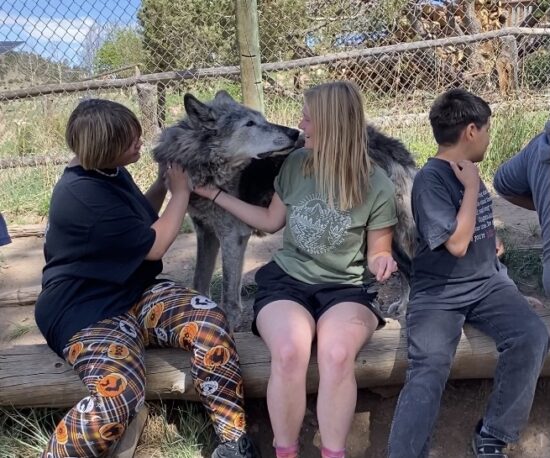 Antes de que nos diéramos cuenta, ya era de tarde y teníamos que seguir trabajando en nuestros proyectos de servicio. Con gran perseverancia y dedicación, los grupos avanzaron mucho y se mostraron entusiasmados por haber “dejado su huella” en Mission:Wolf. Antes de la cena, el grupo pudo participar en una visita especial a los lobos antes de que se pusiera el sol. El grupo comenzó conociendo a dos lobos, Flash y Nashira. Estos lobos fueron extremadamente amistosos y saludaron de forma increíble a un montón de estudiantes. Después, Kent quiso saludar a un lobo más tímido. De estudiante en estudiante, cada persona pudo saludar a Eden. Como Eden es más tímido, el personal de Mission:Wolf todavía está investigando con qué comportamientos y personalidades se lleva mejor Eden. Eden saludó a algunas personas del grupo y Kent lo consideró un éxito. El grupo pudo ver a estos tres lobos aventurarse por su recinto, corriendo, saludando, encontrando cosas con las que jugar y mucho más. Al acercarse la noche, fue una experiencia muy especial pasar tiempo con estos lobos. Antes de que se pusiera el sol, el grupo cenó y disfrutó de nuestro último círculo nocturno juntos.
En nuestra última mañana, los alumnos practicaron el desmontaje de las tiendas de campaña y la recogida de su equipo. Antes de abandonar el campamento, el grupo participó en una última sentada. Reflexionaron sobre su experiencia especial mientras escuchaban el viento y los insectos. Nos separamos de nuestro campamento y nos aventuramos a subir a la base de Mission:Wolf por última vez.
Mientras la furgoneta salía de la propiedad de Mission:Wolf en dirección a Denver, nos despedimos de Zeab, Cephira, Flash, Nashira, Eden, de todos los demás lobos, del personal de Mission: Wolf, del campamento y de las montañas Sangre de Cristo. Los estudiantes se relacionaron con varios lobos diferentes, aprendieron sobre el comportamiento de los lobos, jugaron juegos increíbles y compartieron risas como grupo.
¡Gracias a STRIVE Prep Sunnyside por una aventura increíble!
