During Watershed Internship Workshops Students Explore the Connections Between Waterways, Land, Community & Change
Written by Monique Murillo, CI Field Instructor. Over the course of four different days, students participating in our Watershed Internship Workshops explored the different buildings at CSU Spur campus as well as waterways outdoors. Shane, the Executive Director of Confluence Colorado, led the charge of educating students about the different watersheds, where our water comes from, and where it goes. Sean pointed out how water moves from the mountains and down into the rivers and eventually into the cities, and how the flow continues to go from town to septic to river to city, etc.
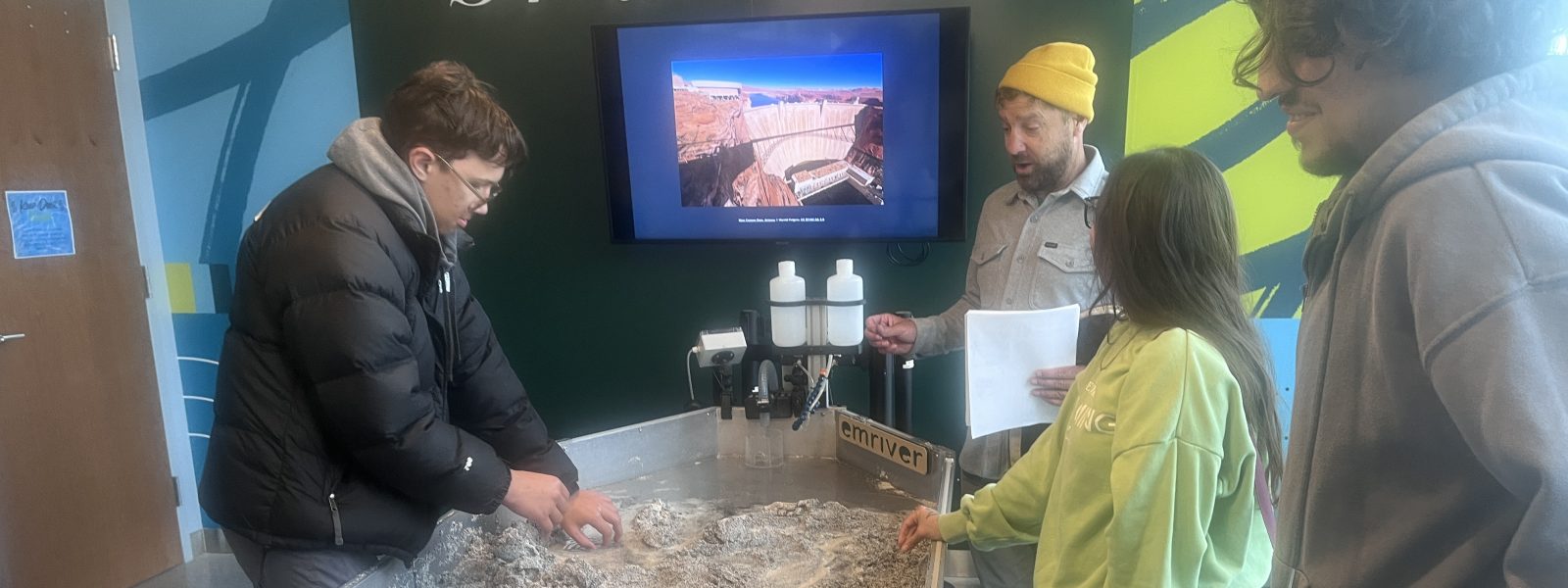
Students then interacted with the river water table at the Hydro building. They created different scenarios to see different impacts of water flow rates and also barriers to water flow. The group walked along the Platte River to check out the sustainable water drainage system that was recently built around CSU Spur, tested water quality of the river, and also looked for various macroinvertebrates in water samples from the river.
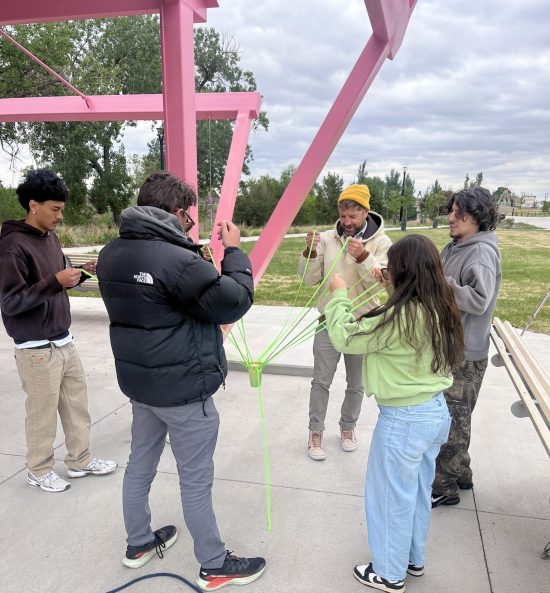 Students talked about the impact of agriculture and livestock on water and water usage. They learned about controlled environment horticulture at the Terra building and got to check out different exhibits. The group talked about agricultural water use and water rights, the powers behind who controls the water, and the impact of colonialism on the land. Shane emphasized the focus of Manifest Destiny through history and its impact of displacing indigenous peoples, devastating land, and disrupting water access, and shared how it continues to impact present day society.
Harmony, a co-creator of the Abolition Garden and also a teacher with Cottonwood, had students take a moment by the river and then discuss their relationship with water growing up. Harmony proceeded to discuss the history of Globeville, the impact of the Asarco smelter, and the pollution of the Platte River. This impact on Globeville, Elyria, and Swansea (GES) has been the cause of so many health problems, continued pollution, and limited access to clean resources because of industrialization.
Harmony also mentioned the impact on these communities being able to grow food due to so many contaminants. The group then drove to the Abolition Garden to discuss community engagement, community gardens, and different aspects of indigenous farming. Harmony talked about ollas, waffle grid farming, and the different types of produce that they grow at the gardens. Students learned about different ways the community has been able to regain access to food and learn interdependence with the land. It was a beautiful way to end the workshop as students painted terracotta watering pots for pollinators for the garden.
A big thanks to the funders and supporters who make this program possible, including Climax Molybdenum, Confluence Colorado, and the Walton Family Foundation.
If you too are passionate about getting students outside for learning about waterways, please consider making a donation or becoming a monthly donor! You’ll help invest in our students, programs, and long-term sustainability and success!
