Hands-On Snow Research and Real-World Data Collection Bring Climate Literacy to Life for Students in Colorado’s Winter Landscape
Written by CI Field Instructor Shawn Heyland. On a quest to find snow and learn about the impact climate change is having on our winters in Colorado, a class from Apex School in Boulder set out on a fulfilling two-day adventure to Berthoud Pass. The primary goals for this climate literacy-focused trip included learning about our changing snowpack and the efforts to manage it, getting hands-on experience with the equipment used to monitor our snowpack, and having fun!
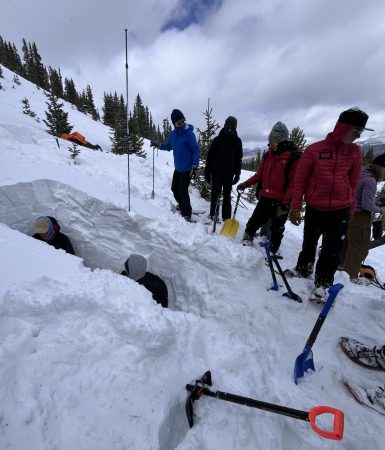 The morning of day one led us to the top of Berthoud Pass, where we met with hydrologists working to collect SNOTEL (SNOwpackTELemetryNetwork) data. This helps the region understand how much water we have in our snowpack, which helps communities make decisions on water usage, for example. Students had the opportunity to learn how scientists use various instruments to measure snow depth, snow water equivalent (how much liquid water is in the snowpack), and other key data points to analyze the snow’s integrity. We took some data points, then dug snow pits to talk about the different layers of the snow and how they hold moisture. After a fun and educational morning of hands-on snow science, we wrapped up our time on Berthoud Pass by having an open discussion with the hydrologists about their jobs, their career paths, and the vital work they do to help us understand our changing climate.
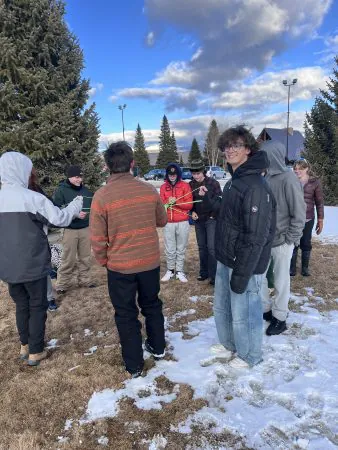
Our home for the night was a cozy cabin at Snow Mountain Ranch. Before settling into the cabin, we played a water users team building activity outdoors wrapped in concepts we discussed earlier in the day. We then made our way to the cabin, where students whipped up tasty burritos for our communal dinner. Once we were full, we dove headfirst into a wild game of Sardines. The premise of the game is like Hide-and-Go-Seek, but everyone goes to look for one person, and once they find the hidden person, they too hide with them until only one person is left searching. The best part is that we played the game in the cabin with the lights off. It was nothing short of hilarious and goofy. Laughter echoed throughout the cabin as we ran up and down the stairs looking far and wide for the hidden person. After some stellar rounds of Sardines, some of us took a moment to step outside to admire the stars before heading to bed.
 The next day, we packed up the cabin for another snowy adventure on Berthoud Pass. This time, our mission was to record snow depths along a wintery snowshoe hike for CSO, or Community Snow Observations. Here, we took what we learned from the previous day and used the Snow Scope app to record snow depths using probes. The Snow Scope app is one tool backcountry adventurers can use to record total snow depth using a snow probe. This data is then used by researchers to understand our snow and water situation. “Predicting and understanding variability in water runoff is important due to effects on snow avalanche hazards, water resources, ecology, tourism, and the impacts of a changing climate,” says the CSO website.
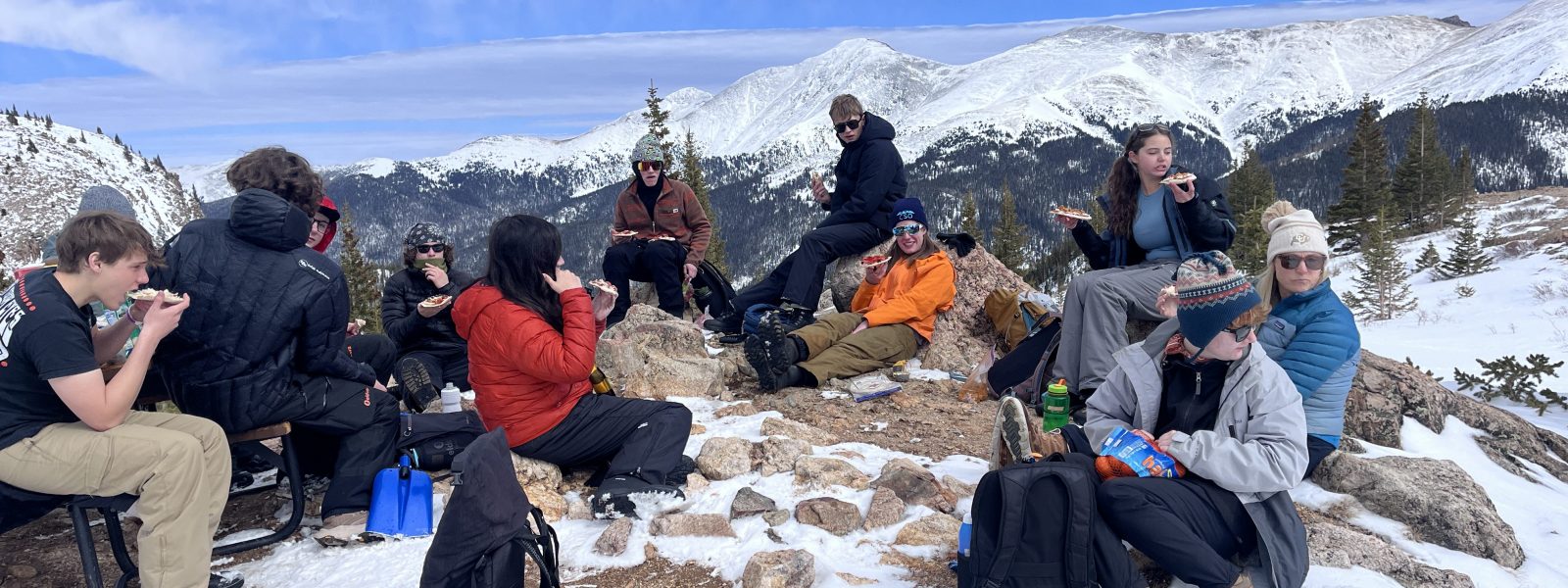
We hiked up to the Broome Hut, which lies in a scenic mountain cirque with no bad views. Along the way, we stopped for frequent snow depth readings and submitted our findings in the app. Some of the snow was quite deep to the students’ surprise. “I’ve never seen snow so deep!” exclaimed a student after diving headfirst into the snowpack, which felt like bottomless powder in this particular area. It was a welcome contrast to the lack of snow we found at our cabin. We also had plenty of opportunities to talk about the flora and fauna we discovered along the hike. After having a pita pizza lunch together, it was time to snowshoe out and move on to our last leg of the trip, the Headwaters River Journey Museum in Winter Park.
“I’ve never seen snow so deep!”
The Headwaters River Journey Museum was the perfect place to conclude our educational climate literacy and snow-focused journey. The museum taught students about the watersheds both east and west of the divide, the challenges we face regarding our water use and water rights, and the wildlife we share this water with. Once we all got through the museum, we debriefed the trip before driving home. Every student enjoyed the experience and took something away from it pertaining to the climate and water issues we face. Collectively, we all felt hopeful and inspired after learning and talking about cutting-edge science and the dedicated people working on solving these critical issues. We realized just how many people care about making the planet healthier, more just, and more habitable for all living beings. Overall, it was an incredible trip filled with learning, fun, and time well-spent in nature.
A big thanks to Climax Molybdenum, whose support made this transformative program possible.
If you’re also passionate about getting students outdoors for climate literacy-focused experiences, please consider making a donation or becoming a monthly donor! You’ll help invest in our students, programs, and long-term sustainability and success!
