
Written by Field Instructor Carly Winner (Escrito en español más abajo)
See more photos here!
 As our partnership continues with Lafayette Youth Corps and Wildlands Restoration Volunteers, we ventured to Cottonwood Park and the Coal Creek Trail in Lafayette! The interns have previously done trailwork along the waterways at Waneka Lake and Coal Creek. Today, we focused on learning about the water quality of Coal Creek and how we can help improve it.
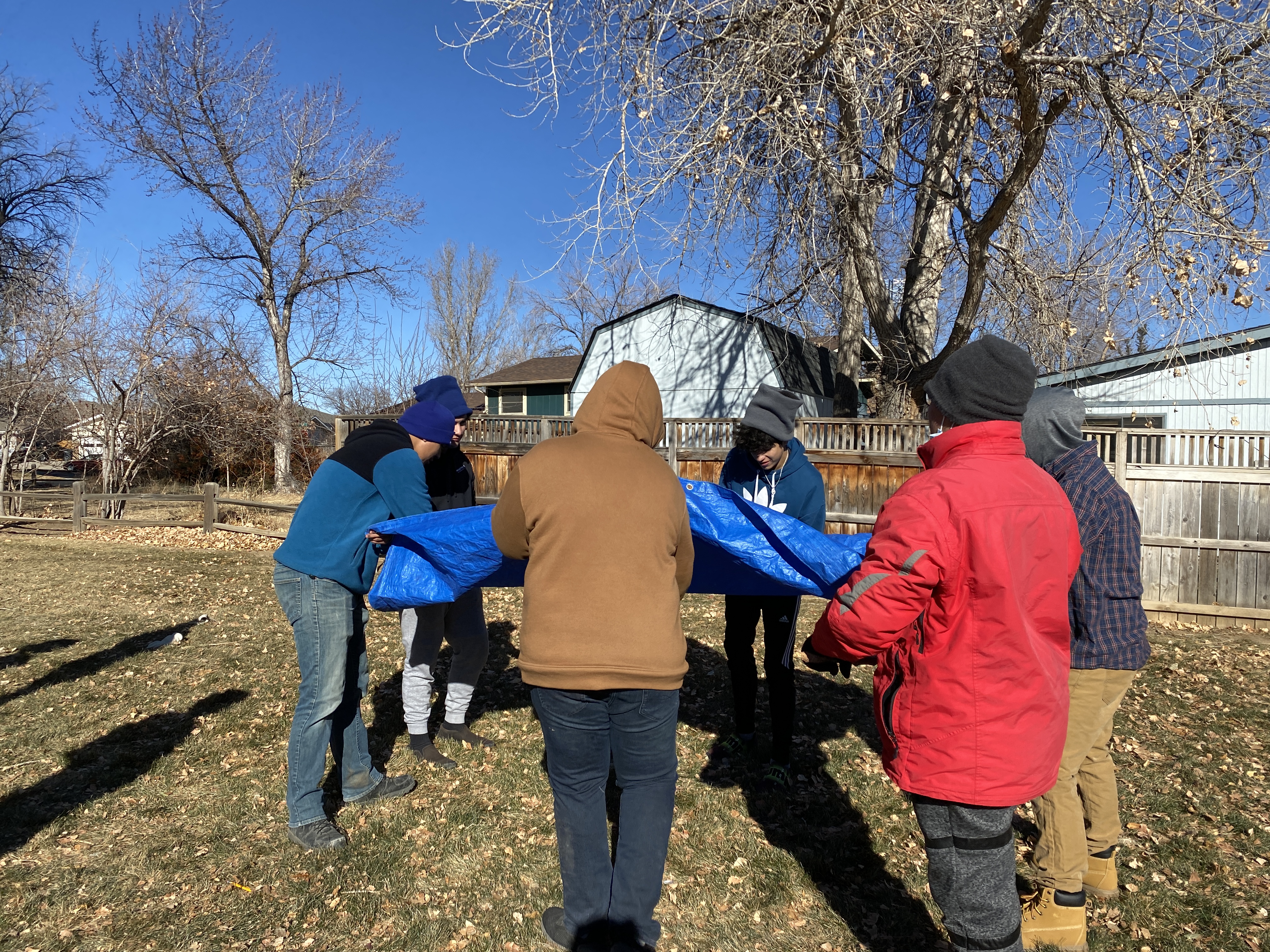
We started the morning by warming up with some stretching and games, as it was a chilly 28 degrees. Then we did an activity called “Back to Back Drawing,” where the interns worked in pairs to choose natural elements to describe to their partners, who faced the opposite direction. The interns reflected that it was most difficult to “get the details down”. They wondered, how can I better describe the lines on the trees? Or the shapes of the leaves? This activity focused on the need for clear and direct communication. Next, they moved to a larger group where five interns worked together to flip a tarp with a tennis ball on it. The challenge? The tennis ball could not hit the ground while the tarp was being flipped. This activity proved to be tough, but the interns faced it with nothing but positivity. After trying several different tactics, both teams successfully flipped their tarp – and better yet, they did it in under 2 seconds!
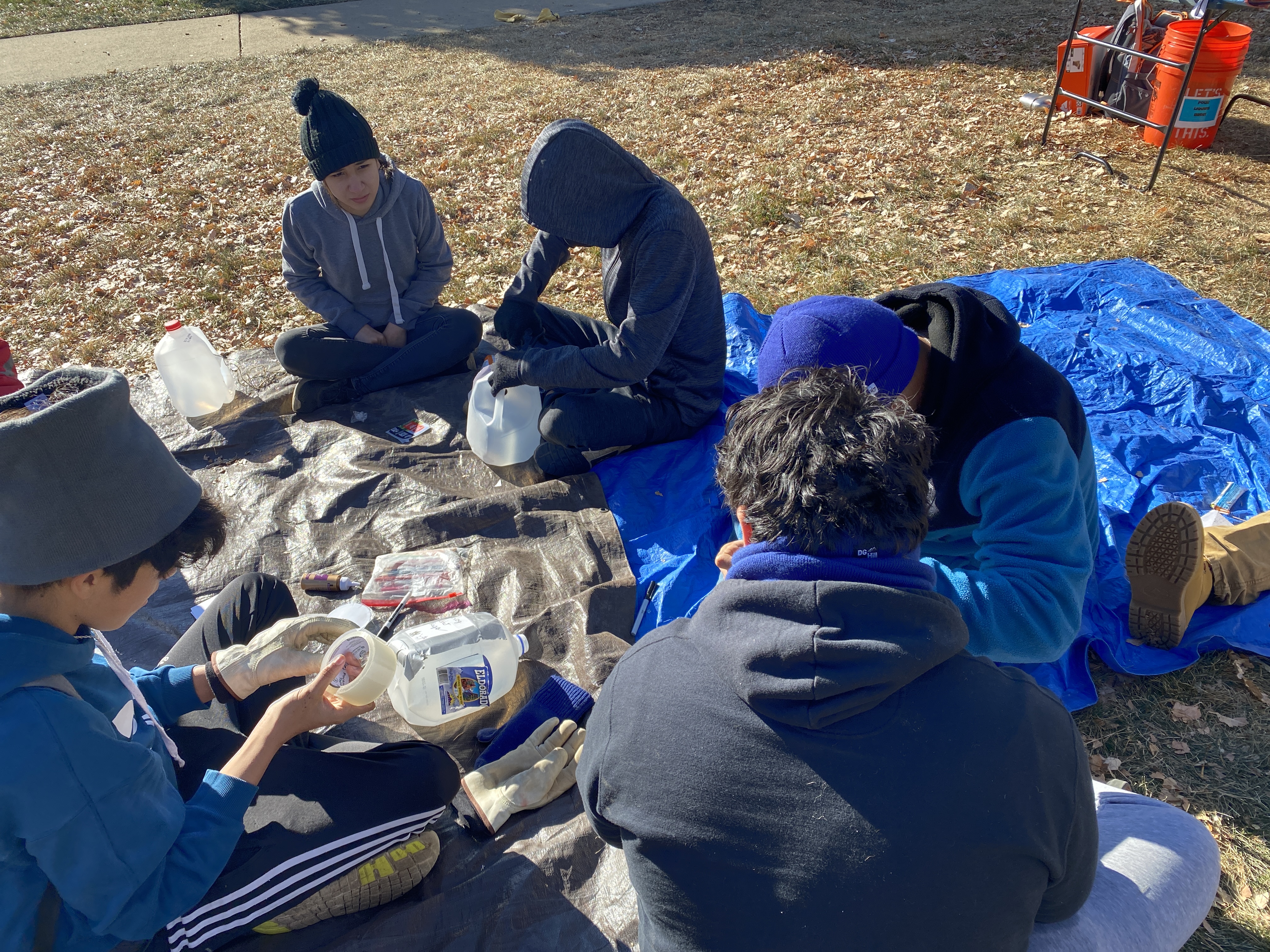
 We switched focus to the environmental issue of water quality. Did you know that pet waste is one of the largest contaminants to waterways? To combat this, we created do-it-yourself pet waste bags to encourage owners to pick up their pet waste. The interns used collected recycled materials such as milk jugs, juice containers, and soda bottles to create the containers and plan to hang them in their own neighborhoods.
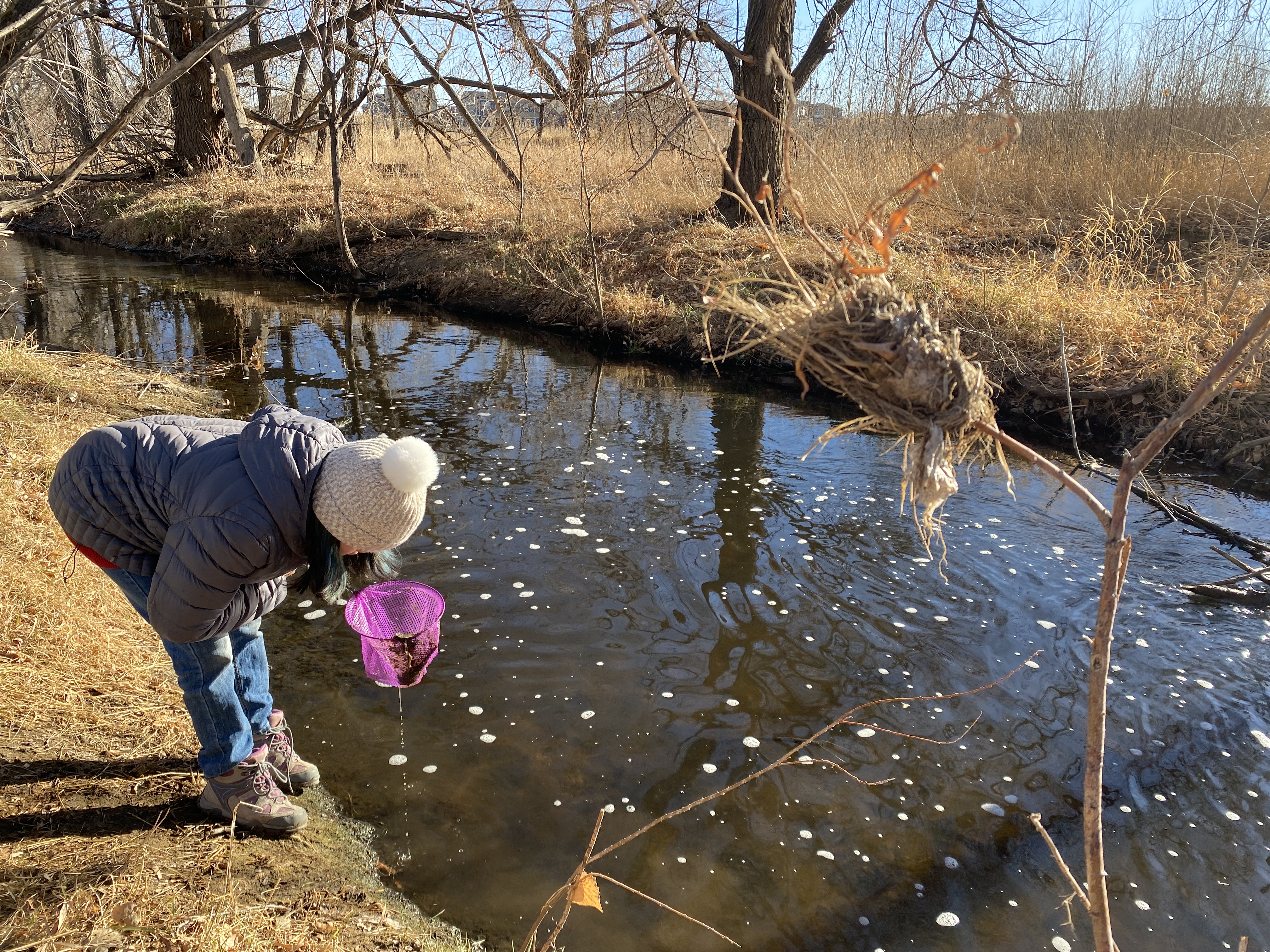
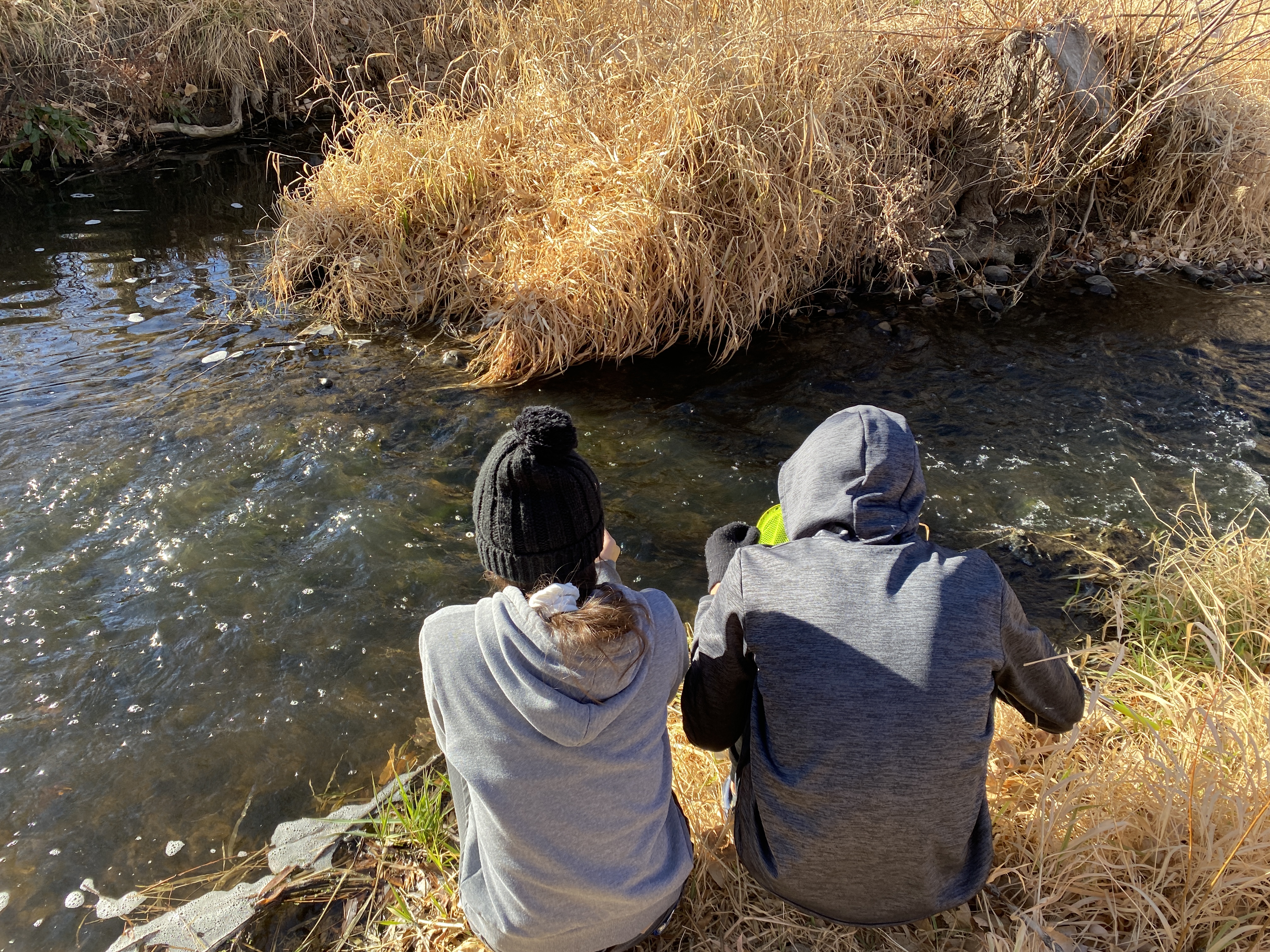
Luckily for the group, Cottonwood Park is a quick three minute walk to Coal Creek in Lafayette! This gave us a great setting to continue our water quality discussion. The interns tested the water in Coal Creek for temperature, pH (acidity), dissolved oxygen, and turbidity (how clear the water is) levels. We also spent time collecting and identifying macroinvertebrates in the creek, including ones that ranged from being tolerant and intolerant to pollution. We found scud, midge larva, flatworm, aquatic worms, and a caddisfly larva! Overall, the interns concluded that the water quality in this section of Coal Creek was average for the area. The water has low levels of dissolved oxygen and, in certain areas, a high turbidity level. After discussing what human impacts might cause the water quality to decrease in Coal Creek, the interns brainstormed solutions for how to improve the water quality. They noted that the dissolved oxygen was the most concerning test we had conducted and decided more research would need to be done for them to find solutions to implement.
As it was a chilly day, and the last day before the interns had a well-deserved two weeks off, we ended the day with s’mores over a homemade camp stove! We learned so much about the waterway in our neighborhood and are looking forward to continuing to learn about how to improve the quality of the creek!
 Continuando nuestra asociación con Lafayette Youth Corps y Wildlands Restoration Volunteers, ¡nos aventuramos a ir al Cottonwood Park y al sendero del Arroyo Coal en Lafayette! Los pasantes ya habían realizado trabajos de sendero a lo largo de las vías fluviales del Lago Waneka y del Arroyo Coal. Hoy nos centramos en aprender sobre la calidad del agua de Coal Creek y cómo podemos ayudar a influir positivamente en ella.
Empezamos la mañana calentando con algunos estiramientos y juegos, ya que hacía un frío de 28 grados Fahrenheit. Empezamos con “Back to Back Drawing”, donde los pasantes trabajaron en parejas: cada uno eligió algún elemento natural que describía a su compañero, quien miraba hacia la dirección opuesta. Tras completar la actividad, los pasantes reflexionaron y afirmaron que lo más difícil era “captar los detalles”. Se preguntaron: ¿cómo puedo describir mejor las líneas de los árboles? ¿O las formas de las hojas? Esta actividad se centró en la necesidad de una comunicación clara y directa. A continuación, pasaron a un grupo más grande en el que cinco pasantes tuvieron que trabajar juntos para dar la vuelta a una lona con una pelota de tenis. ¿El reto? La pelota de tenis no podía tocar el suelo mientras se volteaba la lona. Esta actividad resultó ser dura, pero los pasantes la afrontaron con nada más que positividad. Después de probar varias tácticas diferentes, ambos equipos lograron voltear su lona, y lo que es mejor, ¡lo hicieron en menos de 2 segundos!
Cambiamos el enfoque al tema medioambiental de la calidad del agua. ¿Sabías que los desechos de las mascotas son uno de los mayores contaminantes de las vías fluviales? Para combatirlo, creamos bolsas de residuos tipo hazlo-tú-mismo para mascotas para animar a los dueños a recoger sus desechos. Los pasantes utilizaron materiales reciclados recogidos, como jarras de leche, envases de zumo y botellas de refresco, para crear los contenedores y planean colgarlos en sus propios barrios.
 ¡Por suerte para el grupo, el Cottonwood Park está a tres minutos a pie del Arroyo Coal en Lafayette! Esto nos dio un gran escenario para continuar nuestra discusión sobre la calidad del agua. Los pasantes analizaron el agua del Arroyo Coal para comprobar la temperatura, el pH (acidez), el oxígeno disuelto y la turbidez (la claridad del agua). También pasamos tiempo recogiendo e identificando macroinvertebrados en el arroyo, entre los que había algunos que toleraban y otros que no toleraban la contaminación. Encontramos escamas, larvas de mosquitos, gusanos planos, gusanos acuáticos y una larva de mosca. En general, los pasantes concluyeron que la calidad del agua en esta sección del Arroyo Coal era media para la zona. El agua tiene bajos niveles de oxígeno disuelto y, en ciertas zonas, un alto nivel de turbidez. Después de debatir sobre los impactos humanos que podrían causar la disminución de la calidad del agua en el Arroyo Coal, los pasantes hicieron una lluvia de ideas sobre cómo mejorar la calidad del agua. Observaron que el oxígeno disuelto era la prueba más preocupante que habíamos realizado y decidieron que habría que investigar más para encontrar soluciones que aplicar.
Como era un día frío, y el último día antes de que los pasantes tuvieran unas merecidas dos semanas de descanso, terminamos el día con malvaviscos en una estufa de campamento casera. ¡Aprendimos mucho sobre el curso de agua de nuestro barrio y estamos ansiosos por seguir aprendiendo sobre cómo mejorar la calidad del arroyo!
