
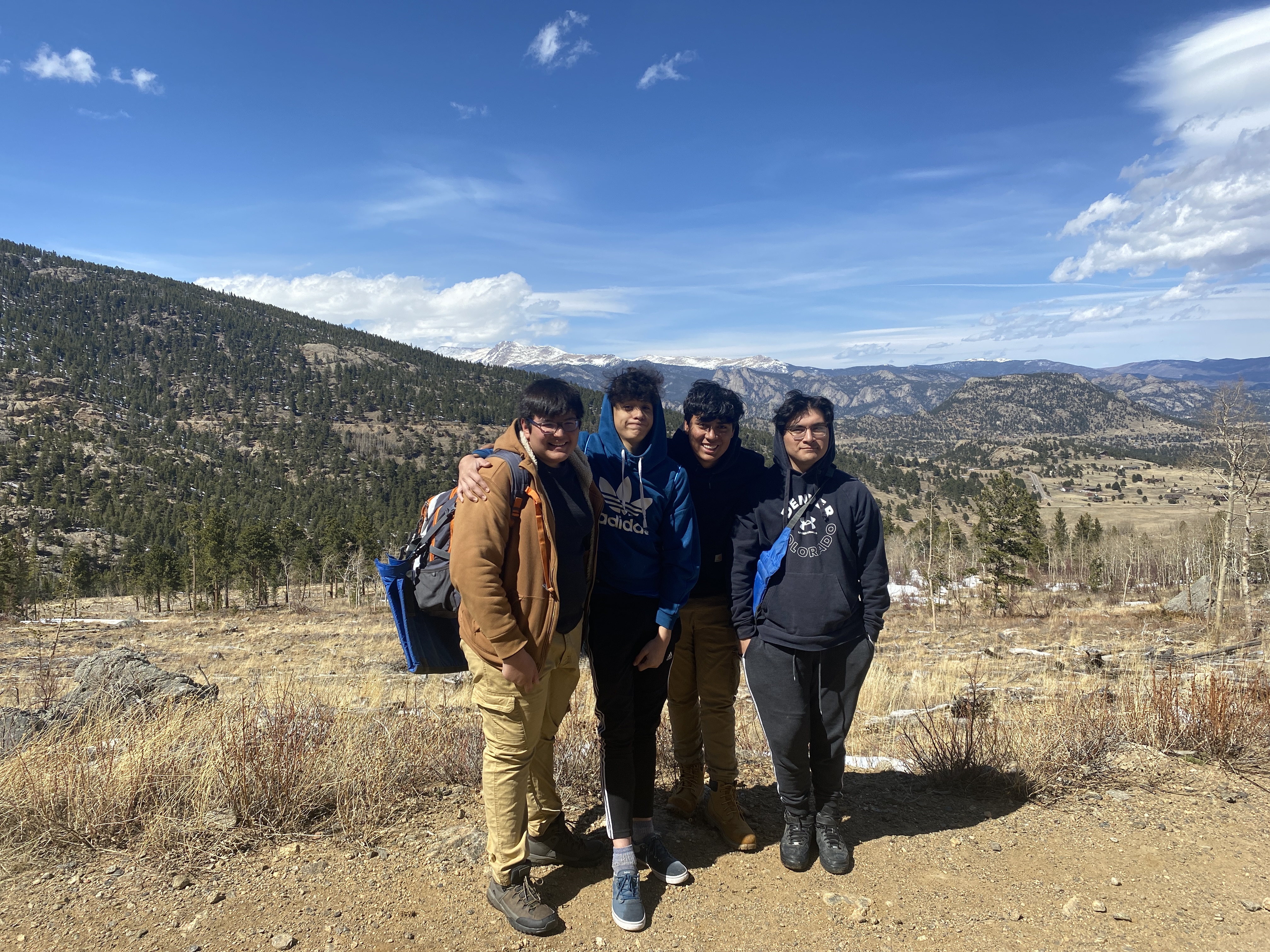
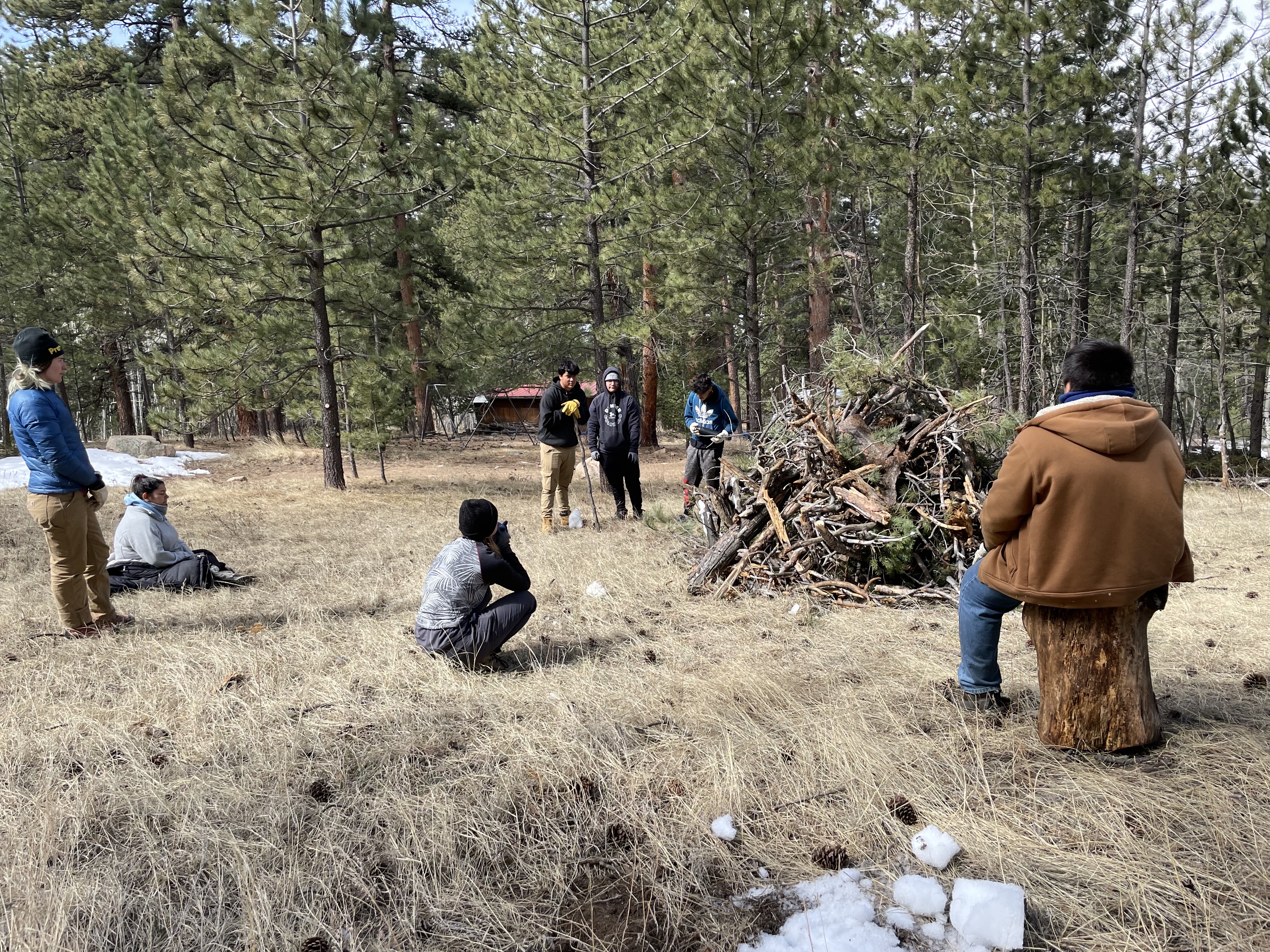
 Lafayette Youth Corps had a spring overnight in Estes Park! The group went hiking, practiced their wilderness first aid skills, and made slash and burn piles for wildfire management. Written by CAP Instructor Carly Winner. Check out more photos here!
Escrito en español más abajo.
The first weekend in April was our closing program with the Lafayette Youth Corps and Wildlands Restoration Volunteers. For our final program, we traveled to Estes Park to a Cheley Colorado Camps campground for an overnight adventure.
As soon as we arrived at our site Saturday morning, the group was eager to begin setting up their tents for the night. After reviewing the 5 W’s of shelter building, the interns felt as if they knew how to properly pick a site to sleep! The group was certain that they could successfully avoid getting the forecasted rain into their tents. They found flat spots that were away from dead trees and the stream and made sure to pull their rain flies out very tight! With sleeping bags and sleeping pads in their tents, the group was ready for a nap. A nap? On a Cottonwood overnight? No way! Instead, the group loaded back up the vans and went on a hike.
 Once the group arrived at the Homer Rouse Trail we discussed trail safety and hazards. While ready to see a mountain lion, a bear, or even another human, we were greeted with a quiet and scenic trail to ourselves! While on the trail, the real fun began.
Each student was secretly given an injury or stressor that they would act out in a medical scenario. Each scenario involved different set up protocols and action steps to ensure the patient’s safety. One student pretended to break their wrist while falling, another dislocated their knee and had a bone break, along with other surprises. The students jumped into action with support of our instructor Sadie, an Emergency Medical Technician, in learning how to properly address the issues. Students learned how to stabilize injuries using items that they already had on the trail such as a sleeping pad, jackets, pants, a hiking pole, and a backpack. Luckily, all injuries were fake and we did not ACTUALLY need to implement any of these learned skills!
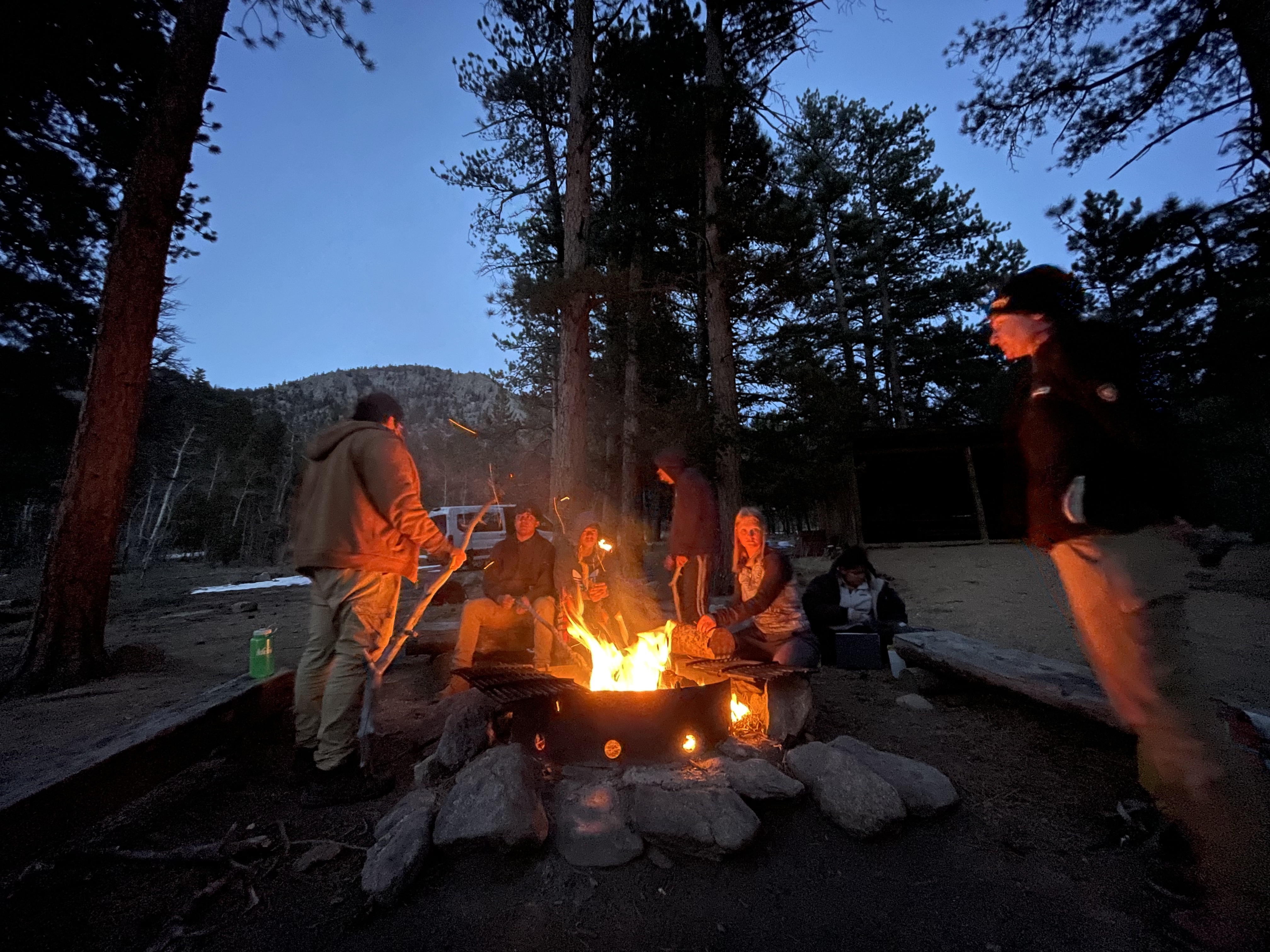 After an awesome hike and learning session, the group went back to the campsite to begin their session on wildfires. Students learned about the importance of managed forests through the MatchStick forest demonstration. We worked with managed and unmanaged forests as well as played with factors such as fire breaks and slope. The group noted that fire is important in order for forests to regenerate, but also can be scary if they threaten human lives/homes. We concluded that managed forests are essential to creating a safe environment for humans, animals, and the forests.
As the night rounded out, the students put on their chef hats and made a delicious meal of burrito bowls with quesadillas. The students practiced both their backcountry cooking and cleaning skills using sump pits for the extra water from cooking. The night ended around the fire with S’mores, reflections, and preparations for the morning ahead.
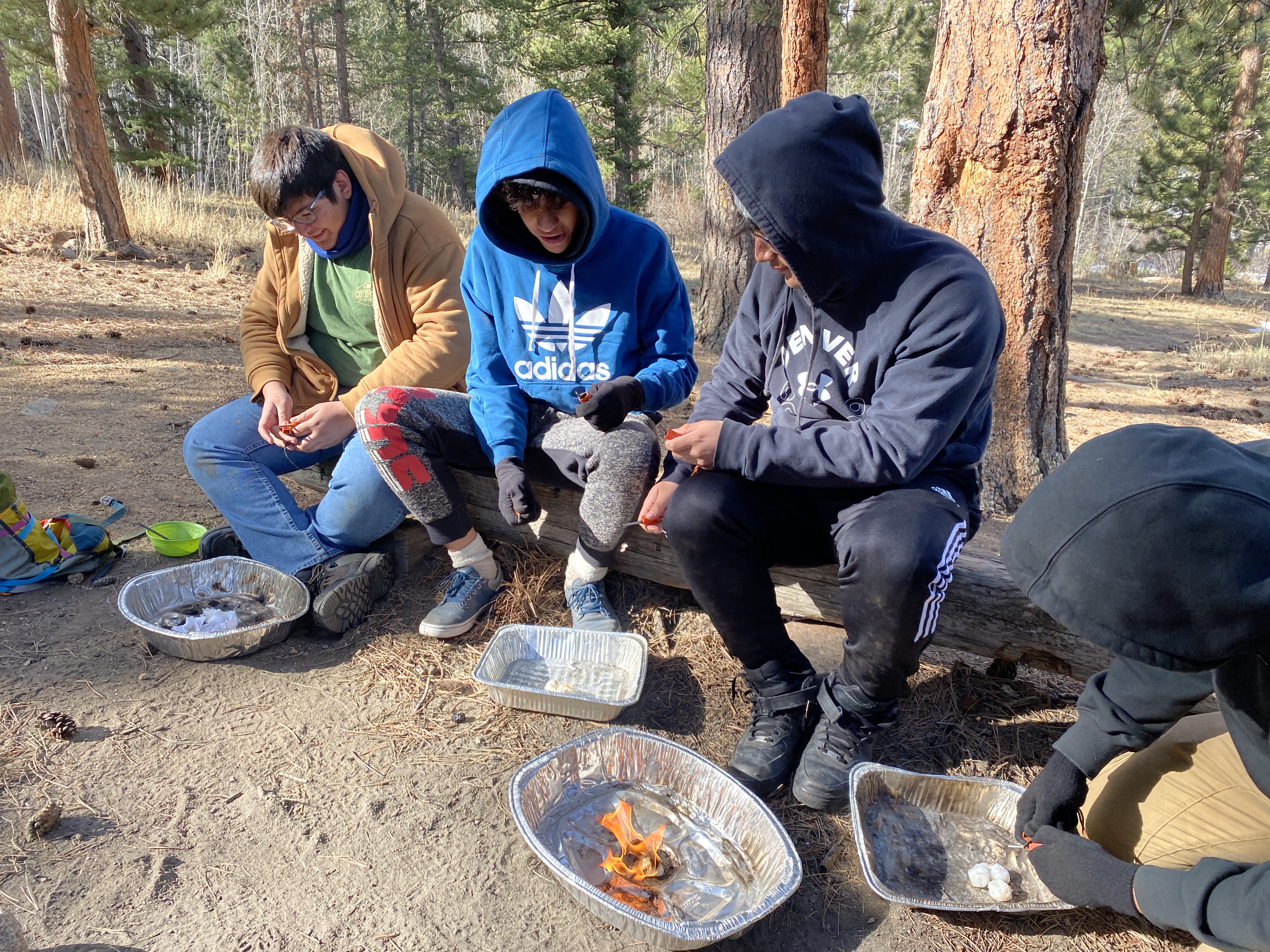
Sunday morning was quick, with our main focus being continuing to learn about fires and conducting a related service project. The group practiced using different fire starters such as cotton balls, vaseline, potato chips, and more! Then, we created slash and burn piles on the site for fire mitigation. The group created four large piles, which will dry out and later be burned by the Cheley land management group. We all agreed that the areas looked better cleared with low amounts of ladder fuel on the trees.
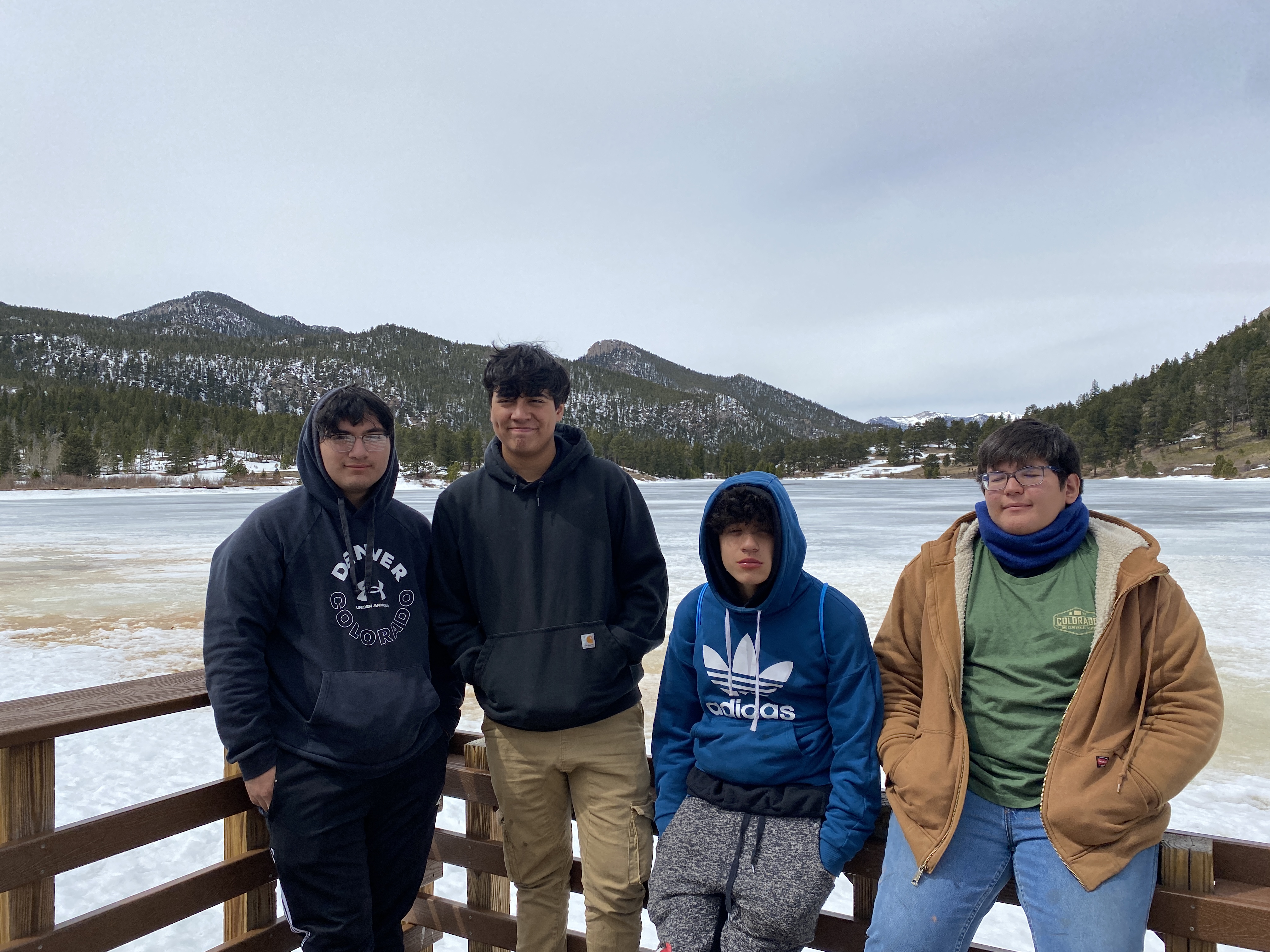
Before heading back to Lafayette, the group took a quick stop at Lily Lake for some reflection of our time together. Students stated they felt “amazing” and “happy”. Others reflected on their group support of one another and how they felt connected.
Thank you LYC and WRV for a great weekend!
 El primer fin de semana de abril fue nuestro programa de cierre con Lafayette Youth Corps y los Voluntarios de Restauración de Tierras Silvestres. Para nuestro programa final, viajamos a Estes Park a un campamento de Cheley Colorado Camps para una aventura nocturna.
Tan pronto como llegamos a nuestro destino el sábado por la mañana, el grupo estaba ansioso por empezar a montar sus tiendas de campaña para la noche. ¡Después de repasar las 5 W’s de la construcción de refugios, los pasantes sintieron que sabían cómo elegir correctamente un sitio para dormir! El grupo estaba seguro de que podría evitar que la lluvia pronosticada entrara en sus tiendas. Encontraron lugares planos alejados de los árboles muertos y del arroyo, ¡y se aseguraron de cerrar bien sus moscas de lluvia! Con los sacos de dormir y las almohadillas en sus tiendas, el grupo estaba listo para una siesta. ¿Una siesta? ¿En un viaje nocturno de Cottonwood? ¡Ni hablar! En su lugar, el grupo cargó de nuevo las furgonetas y se fue de excursión.
Una vez que el grupo llegó al sendero de Homer Rouse, discutimos la seguridad y los peligros del sendero. Aunque estábamos preparados para ver un puma, un oso o incluso otro humano, ¡nos encontramos con un sendero tranquilo y pintoresco para nosotros solos! Mientras estábamos en el sendero, comenzó la verdadera diversión.
 A cada estudiante se le dio en secreto una lesión o un factor de estrés que debía representar en un escenario médico. Cada escenario implicaba diferentes protocolos y pasos de acción para garantizar la seguridad del paciente. Uno de los alumnos fingió romperse la muñeca al caerse, otro se dislocó la rodilla y se rompió un hueso, además de otras sorpresas. Los estudiantes entraron en acción con el apoyo de nuestra instructora Sadie, técnica de emergencias médicas, para aprender a tratar adecuadamente los problemas. Los estudiantes aprendieron a estabilizar las lesiones utilizando elementos que ya tenían en el camino, como una almohadilla para dormir, chaquetas, pantalones, un bastón de senderismo y una mochila. Por suerte, todas las lesiones eran falsas y no tuvimos que poner en práctica ninguna de las técnicas aprendidas.
Después de una increíble caminata y sesión de aprendizaje, el grupo regresó al campamento para comenzar su sesión sobre los incendios forestales. Los estudiantes aprendieron sobre la importancia de los bosques gestionados a través de la demostración de bosques MatchStick. Trabajamos con bosques gestionados y no gestionados y jugamos con factores como los cortafuegos y la pendiente. El grupo observó que el fuego es importante para que los bosques se regeneren, pero también puede dar miedo si amenaza las vidas humanas o las viviendas. Llegamos a la conclusión de que la gestión de los bosques es esencial para crear un entorno seguro para los seres humanos, los animales y los bosques.
 Para terminar la noche, los alumnos se pusieron el gorro de chef y prepararon una deliciosa comida de bowls de burrito con quesadillas. Los estudiantes practicaron sus habilidades de cocina y limpieza en el campo, utilizando fosas para el agua extra de la cocina. La noche terminó alrededor del fuego con S’mores, reflexiones y preparativos para la mañana siguiente.
La mañana del domingo fue rápida, y nuestro principal objetivo fue seguir aprendiendo sobre los incendios y realizar un proyecto de servicio relacionado. El grupo practicó el uso de diferentes iniciadores de fuego, como bolas de algodón, vaselina, patatas fritas y mucho más. A continuación, creamos montones de tala y quema en el lugar para mitigar el fuego. El grupo creó cuatro grandes montones, que se secarán y posteriormente serán quemados por el grupo de gestión de tierras de Cheley. Todos estuvimos de acuerdo en que las áreas se veían mejor despejadas con poca cantidad de combustible estilo escalera en los árboles.
Antes de regresar a Lafayette, el grupo hizo una rápida parada en el lago Lily para reflexionar sobre el tiempo que pasamos juntos. Los estudiantes declararon que se sentían “increíbles” y “felices”. Otros reflexionaron sobre el apoyo que brindaron unos a otros en el grupo y sobre cómo se sintieron conectados.
¡Gracias a LYC y WRV por un gran fin de semana!
