
Life Lessons: Making Connections on CAP Overnights

December 12, 2012 by  
Filed under Community Adventure Program

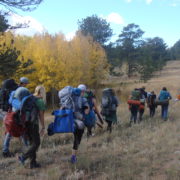
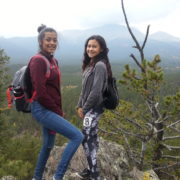
After two overnight camping trips, Community Adventure Program students reflected on their experiences thus far. Many students made deep connections between our class and everyday life. Read what Lucy had to say about her CAP class wilderness experiences:

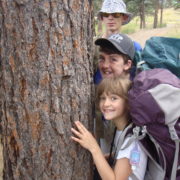
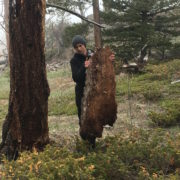
Peter guides Siarra to a Douglas Fir.

I got many things out of the two overnights that we went on as a CAP class. One of the main things I got out of the trips was new friends. When you are spending a lot of time close to the same people, you really get to know them, especially when you depend on them for food, water, and shelter. Especially by the end of the second trip, I was very comfortable spending time with my classmates, and I think now our whole class has a new dynamic. Something else that I took from these trips was a new perspective on how I live. I realized that I don’t spend enough time just by myself to think, and I also spend too much time depending on electronics and communication. After these trips, I will try to live more simply and not depend so much on electronic entertainment. I will also try to save some time for myself to just be outdoors and think.

Students quietly watch the end of a game of Camouflage.

One of the memorable things that I learned on our overnights was how to make a one match fire or a fire with flint and steel. On the first trip I learned how hard it is to make a fire in the first place, and on the second trip I learned that you can do it with one match and patience. Something that goes with this is that I learned how important it is not to become frustrated with bad results. The first time, we tried to make a fire for about an hour, and in that time we did not communicate as a group and we became very frustrated. However, the second time when we were much more patient and communicative, we started the fire quickly and easily. This is a lesson that is not only important for camping but also for life in general.

Something else that I noticed was that in nature, our senses seem to pick up and become much sharper. During my sit spot, I observed my surroundings with great detail. I was in a very good spot so that I could also hear echoes, and I even heard flapping wings of two birds over my head. I would never be able to hear something like this in civilization or even if I was around other people at the time. An example of how my sight improved was with the stars. In the wilderness, you can always see stars better because there are no city lights to interrupt them. I really appreciated the stars more when I could see them better, because I knew they wouldn’t be the same when we got back home.

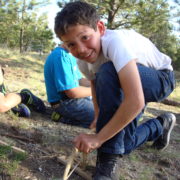
Tyler teaches Malcolm how to make a friction fire using a bow drill.

Victory! The students relax after successfully lighting a “one-match fire”.

I really enjoyed all parts of the trips, but there are several memorable highlights that stood out to me. On the first trip, my main highlight was when we reached the top of our hike and saw the amazing view. I really liked this because after a tiring hike, it was nice to sit and enjoy it for awhile and it felt like we had reached a goal. On the second trip, my highlight was probably the sit spot because we were in such an amazing and peaceful place. Those events are probably the things I will remember most about the trips, but I enjoyed every part of them. Overall, I thought these trips were an amazing and new learning experience and they were one of the best parts of my quarter. Now, I have a better understanding and appreciation for the environment that I will carry for the rest of my life.

Check out more pictures of our adventures by  Clicking Here!

Written by Lucy Briggs, edited by Katie Craig.

Veggies Bring Out The Best In Us – CYC Youth Take On Farming!

In mid July a group high school girls from Colorado Youth for a Change in Boulder (a drop-out prevention program), along with one girl who flew all the way to Colorado from the DC area just for this course, spent four days at beautiful Sunrise Ranch learning the ways of sustainable agriculture on Cottonwood Institute’s Cesar Chavez Organic Gardening Project.  Upon arrival at the ranch, a smiling straw-hatted, bearded man, Patrick, greeted us eagerly and warmly, setting the tone for the entire course.  We toured the property picking apricots out of the trees along the way, and learning that this has been a small farming community for decades. We ended the tour on top of a hill in a beautiful ponderosa forest above the farm, our home for the next four days.

After camp set-up and lunch, we headed back down the hill for our first session of farming. Patrick and the interns living on the farm taught us all about harvesting garlic, cucumbers, and broccoli. Harvesting cucumbers was a highlight as we all got to munch on them while working. To wrap up our afternoon of farming, Patrick thanked us for coming to the farm. One of our students returned that thanks by stating, “You inspire me to garden and thanks for getting us out!”

On the second day we started the day off with a peaceful sit-spot. Many of us looked down into the valley over the farm, with the red cliff bands glowing in the morning light and the songs of meadowlarks accompanying the view. We spent the entire day on the farm, weeding the corn and beans and harvesting four huge buckets of basil. In the afternoon Patrick sat with us under the apple tree while we picked the basil leaves from the stems. As we worked, he taught us about permaculture and even played some banjo for us. After dinner we sat on Moonrise Rock and had an engaging discussion about Cesar Chavez, food, and the agriculture industry. We watched lightning in distant thunderstorms as the light faded and the stars came out.

Wednesday morning started at 6am as we woke up to the yips and howls of coyotes in the valley. Half of us went down to the fields to help move the sprinkler pipes. Working together we lifted the pipes, helping the farmers move the sprinklers in half the time it would normally take. We rewarded ourselves with a frolic through the sprinklers to cool down and ended the morning with a meditation circle, where we learned a Navajo song about beauty and sang and danced in the dewy field.  We spent the remainder of the day re-making Shelly Mo, a giant Mother Earth turtle pizza oven that had been washed away in the rain. Everyone got down and dirty mixing together the clay, water and manure mixture to make up her shell. We got the afternoon off at the pool, and after relaxing for a while we went back to the farm to make pizzas in our finished oven. The interns helped us harvest onions, basil, beets, zucchini, kale, and garlic to put on our very own pizzas! We even got to have pesto sauce made from all the basil we picked the day before.

We had an amazing evening hanging out with the interns making delicious food. By the time we had to head back up, we were all full of pizza, a familial love and a real sense of the community around farming. Once again we sat on Moonrise Rock, this time with a fit of giggles, giddy from the evening of fun. Once we calmed down we had a touching thank you circle to wrap up our last night on the farm.

On our final day we finished weeding and planted flowers, leaving behind a blossoming memory for the interns and Patrick. We held a roses, thorns, and buds circle followed by many goodbye hugs from our new friends on the farm. Patrick and the interns taught us so much about sustainable agriculture, love for one another and our planet, and how we can all make a difference for the environment with our decisions around food. One student stated that her time on the farm “opened my eyes to the issues of modern agriculture and what individuals can do to make a positive impact for sustainability.”

Many thanks to Sunrise Ranch for giving us an opportunity to learn in such a beautiful place and to Patrick for giving us his expansive knowledge on farming!

Click here for pictures of the adventures!

Written by Kelly Muller.  Edited by April Pishna.

The Three C’s: Casa, Calwood, and Camping!

July 31, 2012 by  
Filed under Casa de la Esperanza

Throughout 2011 and 2012, Cottonwood Institute has been partnering with Casa de la Esperanza, a Boulder County housing community in Longmont.  We have gone on day hikes, hosted movie nights, and worked on action projects.  And finally, on the weekend of July 21st, we embarked on the best adventure ever – CAMPING!  The forest of Calwood Outdoor Education Center echoed with the laughter of seven boys and four girls.  This group of 9-14 year olds was accompanied by a team of four enthusiastic Cottonwood Institute instructors, three supportive parents and one awesome chaperone for two days of adventure and fun in the mountains above Boulder. This was the first time many of these students have ever been camping, so they were eager to learn about camping and setting up their tents.  What began as a competition to see who could get their tent set up first, ultimately ended in teamwork as parents, instructors and kids all worked together to set up the tents.

After successfully setting up base camp we hiked down to a lake and had some great stone-tossing competitions. We explored around the shoreline and found caddisfly larvae crawling around, and then found hatched caddisflies landing on us! As we strolled along the shore we munched on wild mint and learned about the plants around the pond. After frolicking across the meadows of Calwood, we found a perfect place to play a game of camouflage, which quickly became everybody’s favorite activity of the weekend.

On our hike back to camp shrieks from a couple of the girls alerted us to snake sightings. We all gathered around to watch the little garter snakes slither through the tall grass. The games and activities continued well past dinner and into the evening. We played wildfire tag and talked about the impacts of fire in Colorado. Many of the kids were disappointed that we couldn’t have a campfire until the instructors whipped out no-fire-smores, glow sticks, and LED lights for a pretend fire. When our bellies were full of graham crackers with frosting and chocolate, we embarked on a night hike, where the initial fear of the dark was replaced by awe at the starry mountain sky. Not to be outdone by the darkness and yawns, we made time for a few rounds of the always exciting blind drumstalk activity, and finally exhausted,  we collapsed into our tents for a restful evening under the stars.

Sunday morning dawned bright and early as the smiling Casa kids surrounded our tents, eager for breakfast and more adventures. Once we were full of oatmeal, we got our blood pumping by playing a game of Alaskan Baseball with Fred the Chicken toy, then headed over to our service project – fire mitigation. Everyone did a fantastic job hauling wood from the slash piles up the hill to the road.  We were rewarded with watermelon and an energizing game of camouflage. Reflection time and a treasure circle helped bring our weekend to a close, but only because it was Sunday.  If it was up to the kids we would still be there.

Thanks to The Brett Family Foundation, The Community Foundation Serving Boulder County, our donors, supporters, Cottonwood Institute instructors and staff, and the Casa de la Esperanza community for providing the students with this opportunity to enjoy and connect to the beauty of the outdoors!

Click here to check out a slideshow of the adventure.

Click here for Casa de la Esperanza’s report on the adventures.  We are all in agreement – Can’t wait for next year!

Written by Kelly Muller.  Edited by April Pishna.

Wandering in Nature with Buckley Air Force Base Youth

July 26, 2012 by  
Filed under Operation: Military Kids

This has certainly been one of Colorado’s hottest summers, but that did not deter the Buckley Airforce Base Youth Group from going out to the woods for a weekend of adventure and learning with the Cottonwood Institute. On June 23rd they departed to the Colorado Lions Camp and Conference Center outside of Woodland Park near Colorado Springs to brave the heat and wander the woods.

After setting up camp, the group dove quickly into learning about fire skills and shelter building. Fire became a big topic on this course, as the kids witnessed the beginning of the Waldo Canyon Wildfire. They watched the column of smoke grow and billow, coming face to face with the knowledge that fire can affect anyone, anytime, anywhere.  Knowing their location was safe from the fire, the students were eager to learn more about nature and survival.

The afternoon brought on a two hour exploration starting in the ponderosa pine forest and winding down into a ravine to a boggy, willow-filled environment. This became the highlight of the course. The students found some intriguing bones and spent a good deal of time asking questions and speculating as to what had happened, what animal they were looking at, what gender it was, why it died, etc. Nature awareness was also brought into play as the group observed and identified the different plants in the changing environment.

To wind down the weekend’s events, each group member shared a story, leading into unique and interesting conversations, including a discussion on what it means to connect to nature. Although the course was short, the adventures, lessons, and friendships built will last forever.  What more can you ask for?

We are very thankful to all of the donors and supporters who made this course possible for these military youth, especially the Markham Vineyard’s Mark of Distinction Program, which helped fund this project. But don’t take our word for it, check out this short thank you video from our students:

Written by Kelly Muller.  Edited by April Pishna.

Enchanted Evenings at Mission:Wolf with West Denver Prep

July 3, 2012 by  
Filed under STRIVE Prep

The long lazy days of summer has just begun, but a group of 12 West Denver Prep Lake Campus students decided to give up a few of these lazy days for an adventure at Mission:Wolf (MW) this past June.  MW is located near the beautiful Sangre de Cristo mountain range just outside of Westcliffe, Colorado. It is a wolf sanctuary housing up to 40 wolves at one time, relying on staff, volunteers, and groups to help maintain the property, feed the wolves, and of course, give them special attention.

After packing up all the gear and food, we piled into the van, and with snacks and cold beverages at hand for our 4 hour drive, we were off.  It only took about 2 hours to hear the dreaded, “Are we there yet?” but thanks to the tunes, the giggles, and the wonders of air-conditioning, we made it up the steep hill and into MW, bright blue sky, blazing sun, and all.

We were all excited to meet the wolves, but there was even more excitement to help feed them when we started hearing whispers that we were going to help butcher a cow that had recently died. (Local ranchers donate their deceased horses and cows to help the costly expense of feeding the wolves.)  This excitement held strong the entire 4 days we were there, even while setting up tents, basecamp, and creating our outdoor kitchen. These kids were far from done for the day, so we set out on a short hike to Carcass Canyon to explore the variety of bones leftover from the many wolf feedings, played a game of camo in the waning daylight, and then hiked back to base camp for some good old fashioned hot dogs.  Still not worn out, with the stars lighting our way, we headed out into the night for another hike, where we became familiar with our surroundings by using nature awareness skills and night senses.

Morning came a bit too early for all of us, but the howls of the wolves were our alarm clock and after a hearty breakfast of eggs and sausages, it was time to hike up the hill where we helped feed the wolves and setup the groundwork for a new horse fence.  After lunch we managed to motivate this young group of city slickers into creating some amazing debris shelters and even had them participating in and understanding the importance of a sit-spot. One student even went so far as to say, ‘That was the most relaxing thing ever.”  Never doubt the importance of a sit spot.  But our day was far from over. The kids heard the rumors that the cow was about to be butchered, and we spent the next two hours being both thrilled and disgusted watching this intricate, bloody, yet necessary task.  This was both the highlight and lowlight (the smell was awful) of the trip for most of the kids.  Although it is quite rough to watch, it is an amazing opportunity to experience first hand the full cycle of life and food and while the kids may not fully comprehend that yet, they will never forget it.

Our last full day was spent helping out around MW, feeding the wolves, playing games, making journals, reading stories, and more importantly, finally meeting the wolves.  While wolf kisses were limited, smiles were not.  No matter how hot it is or how tired you may be, it is always an uplifting experience to walk into the wolf enclosures, sit down, and be face to face with an actual wolf. We ended our final day with another night hike longer than the first and with a great deal more excitement.  While it is uplifting to meet a wolf, it is even more uplifting hanging out with 12 year olds who do not camp and who turn down the outdoors to watch tv or play video games on a regular basis, but will go excitedly on a night hike without flashlights; laughing, singing, hot chocolate-filled city kids having the time of their life in the middle of no where, having only stars and their voices guiding the way.  Amazing!

Due to the heat of the day, late nights, and kids who are not used to the outdoors, motivation was lacking at times. But once these kids tried something new, many were genuinely interested and when given a chance and encouragement, they worked hard and listened attentively.  But wait, we had one last hurrah on the drive out of MW.  “Look!  Way off in the distance! Is it a dog, is it a fox? No, It’s a BEAR!”  Lessons learned from this trip: put yourself in the right place at the right time and always try something new!

As always a great big thanks to Mission:Wolf for hosting us and giving the kids rides up that long, steep hill. They loved it!

Click here for a slideshow of the adventures!

Alpha Males – Colorado Academy Takes Over Mission: Wolf

June 26, 2012 by  
Filed under Notes From The Field

In late May, a group of high school boys from Colorado Academy took over Mission: Wolf (MW).  Accompanied by their teacher, school principal and three Cottonwood Institute instructors, the boys enjoyed five technology free days learning about wolves and primitive skills, while working hard on several service learning projects. Located just outside of Westcliffe, Colorado, MW is home to rescued wolves and wolf-dogs. Staffed mainly by volunteers, visitors offer MW much needed help with day to day projects to keep the sanctuary running smoothly. If you want to be kissed by a wolf, you must do the work first.

Each morning began with a quote to lead into the daily activities. In the warm, windy weather the boys played team-building games, learned survival skills such as shelter building, how to make fire, animal tracking and nature awareness. They explored the diverse area on various hikes and worked hard to move granite, wood, and help with road-repairs to give back to MW. Most importantly, though, they found time for some “sick” hacky sackin’ sessions and of course, time with the wolves!

In addition to feeding the wolves, the boys also got the opportunity to butcher an entire horse! Local ranchers donate deceased horses to MW to help with the immense cost of feeding these amazing animals.  This process gives students a unique experience in a true hands-on food cycle process.  While it was quite bloody, it captivated the attention of the whole group, some becoming completely drawn into cutting up the horse while others preferred to simply watch. The process not only connected the group with the staff, but also the wolves, giving the boys an understanding of both the cycle of life and wolf pack dynamics.

While listening to the howl of the wolves, the students ended the course with a sit-spot to appreciate the beauty of the area and the unique experience of hearing and meeting such powerful creatures in the mountains of Colorado. One student summed up the experience quite nicely, “I have a deeper understanding of the world around me and I appreciate nature and all it has to offer.”

A special thank you to Mission: Wolf for all they do for their volunteers, students, all of us here at Cottonwood Institute, and more importantly, nature, the wolves, and the surrounding animals.

Written by Kelly Muller and edited by April Pishna.

AOR Survives – Hoot!

June 26, 2012 by  
Filed under Cottonwood Institute News

On Monday, June 18th, 2012, Agency Off Record, Inc. (AOR), a spunky advertising agency in Denver, CO, closed the office for the day and took off to the mountains for a 1-day survival training with the Cottonwood Institute. Leaving the 100 degree heat behind, AOR did what every responsible company should do: unplug, leave client deadlines and cell phone range behind, and head to the mountains!

Hoot, Hoot! After arriving at our stunning base camp location for the day, the AOR crew gathered up to learn more about our genius hoot system for communicating outdoors and a quick safety briefing, including how to pee and poop in the woods. A special shout out to the Admiral, the Queen and Mr. and Mrs. Peebody. Let’s just say after our bathroom talk, the word of the day was…wait for it…splatter cakes!

Smiles were exchanged for game faces as we broke AOR into two groups to compete in a series of survival challenges throughout the day. They came up with creative team names, including: Donner Party! and Stud Ranch? The losing team had to buy the first round at Oskar Blues in Lyons, CO at the end of the course, so needless to say the stakes (and bragging rights) were extremely high. Check out this video of one of their first challenges to visually represent wind:

Each team fought “to the pain” and were neck and neck all day. They participated in a survival scenario, competed in a shelter building competition, and were briefed about several fire building techniques, primitive and modern fire starting methods, and how to make their own survival kit. Without a clear winner, Donner Party! eventually emerged victorious in triple overtime when they correctly guessed the age of Ford Church, the Cottonwood Institute’s Founder and Executive Director, who was honored to instruct the course along with co-pilot Kristin Maharg.

Look out Survivor, a new highly trained group of survivalists are ready to take you on next season!

To check out our slide show to re-live the magic of the day, Click Here.

Cottonwood Institute Instructors Connect

June 15, 2012 by  
Filed under Cottonwood Institute News

Amidst the hustle and bustle of Chautauqua Park on a Saturday morning a ragtag group of outdoorsy people waited to load up the caravan of cars heading to Calwood Outdoor Education Center.  Sounds like a group of students waiting to attend a summer camp, huh?  Well, sort of…once again it was time for Cottonwood Institute’s annual summer instructor training weekend.  With a few new faces joining the veterans, we made our way out of Boulder’s weekend traffic ending our mini road trip at Calwood’s beautiful Solitude Camp Site.  With nothing but the wind in the trees to accompany us throughout the weekend, we set to work.

After a morning stretch, hike, and inspiring quote, we set up camp, created our outdoor kitchen area, learned a few things about group gear and safety, enjoyed a much needed sit spot and then hungrily dove into our lunch of tuna salad.  We then worked on shelters and fire skills, participated in a medical scenario, and even witnessed a black widow capturing a bumblebee in her well-spun web.  Exhausted yet content and warm under the late afternoon sun, it was time for a break where we all relaxed and got to know each other more while a pot of pizza rice simmered on the stove for dinner. A relaxing fireside chat of what if scenarios and a birthday surprise of chocolate cake for our outstanding Executive Director, Ford Church, preceded an unusually warm and windy sleepy night.

We awoke to a slight chill in the air, which a hearty breakfast of oatmeal and granola cured quite quickly and we set right into action on our service learning project where we worked hard assisting Calwood with a fire mitigation project. We talked more about risk management and dove deeper into the paperwork portion of implementing successful courses, played a few games, learned some new debriefing skills, and as time flies quickly, it was time to go.  As on any great Cottonwood Institute course we participated in a reflection activity and ended the training with a sit spot to complete our evaluations.

Although the weekend was quite busy, there was time to enjoy the calm of the outdoors before we headed back to the hectic schedules of our everyday lives. As Cottonwood Institute instructors we connect our students to the outdoors and help them find their reason to care about the environment.  In order to do this and do it well, we must remember to continually make that connection for ourselves. This weekend offered this much needed connection.

Here’s to the amazing group of instructors that I had the pleasure of attending Cottonwood Institute’s instructor training with.  Without you, it would just be another day in the office!  You rock!

Click here for a slideshow of the weekend’s adventures.


Lakewood High School Students Change Their World

June 13, 2012 by  
Filed under Cottonwood Institute News

Eight months ago, Cottonwood Institute embarked on a new journey, Mini CAP, with a group of sophomores from FAST Tracks, a dropout prevention program at Lakewood High School. Mini CAP is a spin off of our core curriculum at New Vista High School in Boulder, the Community Adventure Program.  We took our CAP curriculum and revamped it into a mini curriculum to include all of our core components including a student led action project and outdoor skills.  By doing this we are able to connect more kids to the outdoors empowering them to discover their reason for caring about the environment.  Students met twice a week during the 2011/2012 school year with a Cottonwood Institute instructor and embarked on many adventures throughout the year.

————

We started with a question: Can one person change the world? At the beginning of this course the majority of the students  simply said no because it takes more than one person and left it at that. But at the end of the course – 7 months later – there came a deeper understanding of the same question.  One student summed it up well, “I know I can change the world. But I also know I can’t do it by myself.”


This realization did not come easy. We worked through sarcastic comments, pessimistic thoughts, and even behavioral challenges getting to that point. We read stories, watched movies, hosted guests, wrote poems, played games, went on field trips, participated in team-building and nature awareness activities, learned survival skills, discussed controversial topics, wrote in journals, learned about environmental issues, and completed an action project around water conservation and pollution.

While we started with only a question, we moved rapidly into personal skills and team-building and then put these to the test on our first field trip to tromp through the snow near Conifer where we built a quinzhee snow shelter and had an epic snowball battle.  Taking the outdoor skills we learned back into the classroom, we worked more on understanding environmental issues and why we should care about these issues.  From there we began to formulate our own ideas and interests leading us into our action project.

After hosting guest speakers on a variety of topics from school environmental clubs to water education, we chose to focus our efforts on water conservation and pollution. This involved everything from tracking our water usage for a week, studying other countries’ usage, playing a water relay race, and creating awareness posters on conserving water, bringing us to our culminating project: working with the City of Lakewood Parks and Recreation to continue their cleanup efforts at Main Reservoir, one of 3 reservoirs for the city of Lakewood.  We also toured Marston Water Treatment Plant, giving us a more complete understanding of  how water is processed to ensure safe drinking water.  This entire process, from education to awareness to action, provided a circle of understanding as to why conserving and caring for our water is important for the safety of not only our community, but for the world.

Some may see cleanup projects and posters as mundane work, but in the word of one student, “Yes, I can change the world. Cleaning the park as a class made the park cleaner.  There might still have been some trash, but that’s one less animal that may die from [pollution].”  I recently heard a story about a man throwing starfish back into the sea as they wash up on shore from the tide and another man says that there are too many starfish washing up on shore to make a difference.  The first man then replies, as he tosses yet another starfish back into the sea, “Made a difference to that one.”

We fought pessimism through the entire course as many of the students see the world and themselves as being selfish. While this was difficult to work through, it was rewarding for all when we broke through this cloud and realized that we can only do what we can do and by our actions, others may follow in our steps.  We talked a lot about motivation and inspiration and what makes people take action and while these students may or may not be the next movers and shakers of the world, they will move and shake you. Their words and actions are quite powerful.  This is what inspires them:

“People that have nothing in life and they find a way to make it.”

“What inspires me is family, friends, and situations in general. And I want a good future. That’s inspiration!”

“My family inspires me because they are always telling me that I can do anything if set my mind to it because anything is possible.”

With inspiration and support like this, watch out world, these kids are going to create change! And with additional support from programs such as Mini CAP, devoted educators, and adult and peer mentors, the change they create will be welcomed by all.  What do you think:  Can one person change the world?

I will leave you with this poem from a student, and then ask yourself one more question: Is it worth it?

  • I AM…a talker and keep to myself
  • I WONDER…what can I do to change things in my life
  • I WANT…to help
  • I AM…only one person who tries to help
  • I FEEL…helping people makes me feel better
  • I WORRY…when my family worries
  • I CRY…when my family struggles or when there is no end in sight
  • I SMILE…when the people I care for smile
  • I AM…optimistic
  • I DREAM…of a better world for my family
  • I TRY…to see the world in a different point of view
  • I HOPE…that one day my family will be happy
  • I AM…an outgoing person

————

A huge shout out to all those that made this program possible: Cottonwood Institute, Wildland Education Awareness Institute for use of its land, Shane Wright of Groundwork Denver, Cottonwood Institute’s Earth Task Force, City of Lakewood Parks and Recreation, Denver Water, Alan Polonsky of City of Denver Department of Environmental Health, and J.D. Prater of Alliance for Climate Education (ACE). A special thanks goes out to both Lakewood High School and teacher extraordinaire, Mr. Robert Giusto!  You rock!

Click here for a slideshow of all the adventures we had throughout the year!


Overnights and Action with CAP

CAP students were quite busy this quarter. Before their first overnight they learned about camp setup, packing their bags, proper camp nutrition, and basic outdoor overnight essentials.  Most of them already had a great deal of camping experience for high schoolers. Or so they said, as they arrived for the overnight with overstuffed backpacks – everything but the kitchen sink!  And so the adventures began…

…And continued.  Although it started heavily snowing, everyone was in good spirits through spreading mulch, going on a night hike, learning about fox walking, setting up a bear hang, and working as a group. Even though they were exhausted and wet, by the time CAP left their first overnight trip everyone was satisfied and excited for the next one.

The next few weeks students worked on their action project, which was all about transportation and the inefficiency of cars. When they went on field trips CAP students only rode bikes, used the bus, or other forms of alternative transportation to leave a smaller carbon footprint. They walked their walk and talked their talk.

Finally, it was time for the second overnight and more adventures with the weather. This time it was all about the rain. Needless to say their spirits were slightly dampened (pun intended!), but as soon as they set up their tents, ate lunch and built shelters, the sun decided to poke out from behind the clouds, helping to raise spirits a bit. Students played elbow tag for an entire hour. (And for those of you who have never played this game, I leave it up to you to look it up and play – well worth the time!) Feeling energized and satisfied, they headed back camp to hang out and eat dinner. The next morning was sunny and warm, and everyone was sad to leave. As CAP ‘s quarter came to an end, the only disappointment was that time had flown by so quickly, but everyone knew the experience of it all was something that would never be forgetten.

Click here for a slideshow of the adventures!

Written By Juliet Luna and edited by Madeline Bachner and April Pishna.

Next Page »