Life Lessons: Making Connections on CAP Overnights
December 12, 2012 by Katie Craig
Filed under Community Adventure Program
After two overnight camping trips, Community Adventure Program students reflected on their experiences thus far. Many students made deep connections between our class and everyday life. Read what Lucy had to say about her CAP class wilderness experiences:
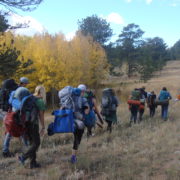
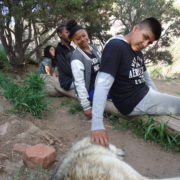
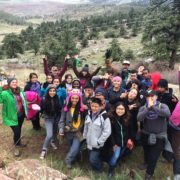
I got many things out of the two overnights that we went on as a CAP class. One of the main things I got out of the trips was new friends. When you are spending a lot of time close to the same people, you really get to know them, especially when you depend on them for food, water, and shelter. Especially by the end of the second trip, I was very comfortable spending time with my classmates, and I think now our whole class has a new dynamic. Something else that I took from these trips was a new perspective on how I live. I realized that I don’t spend enough time just by myself to think, and I also spend too much time depending on electronics and communication. After these trips, I will try to live more simply and not depend so much on electronic entertainment. I will also try to save some time for myself to just be outdoors and think.
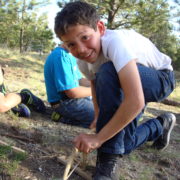
One of the memorable things that I learned on our overnights was how to make a one match fire or a fire with flint and steel. On the first trip I learned how hard it is to make a fire in the first place, and on the second trip I learned that you can do it with one match and patience. Something that goes with this is that I learned how important it is not to become frustrated with bad results. The first time, we tried to make a fire for about an hour, and in that time we did not communicate as a group and we became very frustrated. However, the second time when we were much more patient and communicative, we started the fire quickly and easily. This is a lesson that is not only important for camping but also for life in general.
Something else that I noticed was that in nature, our senses seem to pick up and become much sharper. During my sit spot, I observed my surroundings with great detail. I was in a very good spot so that I could also hear echoes, and I even heard flapping wings of two birds over my head. I would never be able to hear something like this in civilization or even if I was around other people at the time. An example of how my sight improved was with the stars. In the wilderness, you can always see stars better because there are no city lights to interrupt them. I really appreciated the stars more when I could see them better, because I knew they wouldn’t be the same when we got back home.
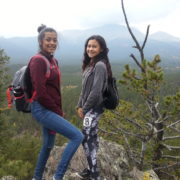
I really enjoyed all parts of the trips, but there are several memorable highlights that stood out to me. On the first trip, my main highlight was when we reached the top of our hike and saw the amazing view. I really liked this because after a tiring hike, it was nice to sit and enjoy it for awhile and it felt like we had reached a goal. On the second trip, my highlight was probably the sit spot because we were in such an amazing and peaceful place. Those events are probably the things I will remember most about the trips, but I enjoyed every part of them. Overall, I thought these trips were an amazing and new learning experience and they were one of the best parts of my quarter. Now, I have a better understanding and appreciation for the environment that I will carry for the rest of my life.
Check out more pictures of our adventures by Clicking Here!
Written by Lucy Briggs, edited by Katie Craig.
The Three C’s: Casa, Calwood, and Camping!
July 31, 2012 by April Pishna
Filed under Casa de la Esperanza
Throughout 2011 and 2012, Cottonwood Institute has been partnering with Casa de la Esperanza, a Boulder County housing community in Longmont. We have gone on day hikes, hosted movie nights, and worked on action projects. And finally, on the weekend of July 21st, we embarked on the best adventure ever – CAMPING! The forest of Calwood Outdoor Education Center echoed with the laughter of seven boys and four girls. This group of 9-14 year olds was accompanied by a team of four enthusiastic Cottonwood Institute instructors, three supportive parents and one awesome chaperone for two days of adventure and fun in the mountains above Boulder. This was the first time many of these students have ever been camping, so they were eager to learn about camping and setting up their tents. What began as a competition to see who could get their tent set up first, ultimately ended in teamwork as parents, instructors and kids all worked together to set up the tents.
After successfully setting up base camp we hiked down to a lake and had some great stone-tossing competitions. We explored around the shoreline and found caddisfly larvae crawling around, and then found hatched caddisflies landing on us! As we strolled along the shore we munched on wild mint and learned about the plants around the pond. After frolicking across the meadows of Calwood, we found a perfect place to play a game of camouflage, which quickly became everybody’s favorite activity of the weekend.
On our hike back to camp shrieks from a couple of the girls alerted us to snake sightings. We all gathered around to watch the little garter snakes slither through the tall grass. The games and activities continued well past dinner and into the evening. We played wildfire tag and talked about the impacts of fire in Colorado. Many of the kids were disappointed that we couldn’t have a campfire until the instructors whipped out no-fire-smores, glow sticks, and LED lights for a pretend fire. When our bellies were full of graham crackers with frosting and chocolate, we embarked on a night hike, where the initial fear of the dark was replaced by awe at the starry mountain sky. Not to be outdone by the darkness and yawns, we made time for a few rounds of the always exciting blind drumstalk activity, and finally exhausted, we collapsed into our tents for a restful evening under the stars.
Sunday morning dawned bright and early as the smiling Casa kids surrounded our tents, eager for breakfast and more adventures. Once we were full of oatmeal, we got our blood pumping by playing a game of Alaskan Baseball with Fred the Chicken toy, then headed over to our service project – fire mitigation. Everyone did a fantastic job hauling wood from the slash piles up the hill to the road. We were rewarded with watermelon and an energizing game of camouflage. Reflection time and a treasure circle helped bring our weekend to a close, but only because it was Sunday. If it was up to the kids we would still be there.
Thanks to The Brett Family Foundation, The Community Foundation Serving Boulder County, our donors, supporters, Cottonwood Institute instructors and staff, and the Casa de la Esperanza community for providing the students with this opportunity to enjoy and connect to the beauty of the outdoors!
Click here to check out a slideshow of the adventure.
Click here for Casa de la Esperanza’s report on the adventures. We are all in agreement – Can’t wait for next year!
Written by Kelly Muller. Edited by April Pishna.
Wandering in Nature with Buckley Air Force Base Youth
July 26, 2012 by April Pishna
Filed under Operation: Military Kids
This has certainly been one of Colorado’s hottest summers, but that did not deter the Buckley Airforce Base Youth Group from going out to the woods for a weekend of adventure and learning with the Cottonwood Institute. On June 23rd they departed to the Colorado Lions Camp and Conference Center outside of Woodland Park near Colorado Springs to brave the heat and wander the woods.
After setting up camp, the group dove quickly into learning about fire skills and shelter building. Fire became a big topic on this course, as the kids witnessed the beginning of the Waldo Canyon Wildfire. They watched the column of smoke grow and billow, coming face to face with the knowledge that fire can affect anyone, anytime, anywhere. Knowing their location was safe from the fire, the students were eager to learn more about nature and survival.
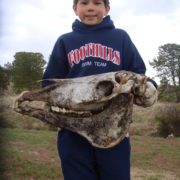
The afternoon brought on a two hour exploration starting in the ponderosa pine forest and winding down into a ravine to a boggy, willow-filled environment. This became the highlight of the course. The students found some intriguing bones and spent a good deal of time asking questions and speculating as to what had happened, what animal they were looking at, what gender it was, why it died, etc. Nature awareness was also brought into play as the group observed and identified the different plants in the changing environment.
To wind down the weekend’s events, each group member shared a story, leading into unique and interesting conversations, including a discussion on what it means to connect to nature. Although the course was short, the adventures, lessons, and friendships built will last forever. What more can you ask for?
We are very thankful to all of the donors and supporters who made this course possible for these military youth, especially the Markham Vineyard’s Mark of Distinction Program, which helped fund this project. But don’t take our word for it, check out this short thank you video from our students:
Written by Kelly Muller. Edited by April Pishna.
Lakewood High School Students Change Their World
June 13, 2012 by April Pishna
Filed under Cottonwood Institute News
Eight months ago, Cottonwood Institute embarked on a new journey, Mini CAP, with a group of sophomores from FAST Tracks, a dropout prevention program at Lakewood High School. Mini CAP is a spin off of our core curriculum at New Vista High School in Boulder, the Community Adventure Program. We took our CAP curriculum and revamped it into a mini curriculum to include all of our core components including a student led action project and outdoor skills. By doing this we are able to connect more kids to the outdoors empowering them to discover their reason for caring about the environment. Students met twice a week during the 2011/2012 school year with a Cottonwood Institute instructor and embarked on many adventures throughout the year.
————
We started with a question: Can one person change the world? At the beginning of this course the majority of the students simply said no because it takes more than one person and left it at that. But at the end of the course – 7 months later – there came a deeper understanding of the same question. One student summed it up well, “I know I can change the world. But I also know I can’t do it by myself.”
This realization did not come easy. We worked through sarcastic comments, pessimistic thoughts, and even behavioral challenges getting to that point. We read stories, watched movies, hosted guests, wrote poems, played games, went on field trips, participated in team-building and nature awareness activities, learned
survival skills, discussed controversial topics, wrote in journals, learned about environmental issues, and completed an action project around water conservation and pollution.
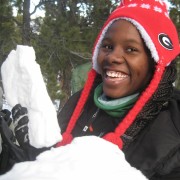
While we started with only a question, we moved rapidly into personal skills and team-building and then put these to the test on our first field trip to tromp through the snow near Conifer where we built a quinzhee snow shelter and had an epic snowball battle. Taking the outdoor skills we learned back into the classroom, we worked more on understanding environmental issues and why we should care about these issues. From there we began to formulate our own ideas and interests leading us into our action project.
After hosting guest speakers on a variety of topics from school environmental clubs to
water education, we chose to focus our efforts on water conservation and pollution. This involved everything from tracking our water usage for a week, studying other countries’ usage, playing a water relay race, and creating awareness posters on conserving water, bringing us to our culminating project: working with the City of Lakewood Parks and Recreation to continue their cleanup efforts at Main Reservoir, one of 3 reservoirs for the city of Lakewood. We also toured Marston Water Treatment Plant, giving us a more complete understanding of how water is processed to ensure safe drinking water. This entire process, from education to awareness to action, provided a circle of understanding as to why conserving and caring for our water is important for the safety of not only our community, but for the world.
Some may see cleanup projects and posters as mundane work, but in the word of one student, “Yes, I can change the world. Cleaning the park as a class made the park cleaner. There might still have been some trash, but that’s one less animal that may die from [pollution].” I recently heard a story about a man throwing starfish back into the sea as they wash up on shore from the tide and another man says that there are too many starfish washing up on shore to make a difference. The first man then replies, as he tosses yet another starfish back into the sea, “Made a difference to that one.”
We fought pessimism through the entire course as many of the students see the world and themselves as being selfish. While this was difficult to work through, it was rewarding for all when we broke through this cloud and realized that we can only do what we can do and by our actions, others may follow in our steps. We talked a lot about motivation and inspiration and what makes people take action and while these students may or may not be the next movers and shakers of the world, they will move and shake you. Their words and actions are quite powerful. This is what inspires them:
“People that have nothing in life and they find a way to make it.”
“What inspires me is family, friends, and situations in general. And I want a good future. That’s inspiration!”
“My family inspires me because they are always telling me that I can do anything if set my mind to it because anything is possible.”
With inspiration and support like this, watch out world, these kids are going to create change! And with additional support from programs such as Mini CAP, devoted educators, and adult and peer mentors, the change they create will be welcomed by all. What do you think: Can one person change the world?
I will leave you with this poem from a student, and then ask yourself one more question: Is it worth it?
- I AM…a talker and keep to myself
- I WONDER…what can I do to change things in my life
- I WANT…to help
- I AM…only one person who tries to help
- I FEEL…helping people makes me feel better
- I WORRY…when my family worries
- I CRY…when my family struggles or when there is no end in sight
- I SMILE…when the people I care for smile
- I AM…optimistic
- I DREAM…of a better world for my family
- I TRY…to see the world in a different point of view
- I HOPE…that one day my family will be happy
- I AM…an outgoing person
————
A huge shout out to all those that made this program possible: Cottonwood Institute, Wildland Education Awareness Institute for use of its land, Shane Wright of Groundwork Denver, Cottonwood Institute’s Earth Task Force, City of Lakewood Parks and Recreation, Denver Water, Alan Polonsky of City of Denver Department of Environmental Health, and J.D. Prater of Alliance for Climate Education (ACE). A special thanks goes out to both Lakewood High School and teacher extraordinaire, Mr. Robert Giusto! You rock!
Click here for a slideshow of all the adventures we had throughout the year!
West Denver Prep Students Venture Into the Chilly Outdoors
May 31, 2012 by April Pishna
Filed under STRIVE Prep
In a league all of its own, West Denver Preparatory’s Lake Campus (WDP) has risen to the challenge to meet the needs of Denver’s burgeoning inner-city demographics. The students at WDP are offered an excellent education and are shown that success later in life and getting into college starts as early as middle school. This spring the Cottonwood Institute is proud to continue their partnership with WDP by leading two overnight camping trips.
The first trip in mid-April turned out to be more of a winter experience than spring. But with the encouragement of our amazing instructors and WDP veteran teacher, Leigh Garrison, we pushed on. To cope with the forecasts of snow and rain, we stayed in a cabin at Highlands Camp near Allenspark, Colorado. In spite of the cold, the group had tremendous energy and we spent the day exploring the area, learning new plants and animals, navigating streams, smelling pine trees, and building survival shelters. A few times throughout the day we stopped and listened, contemplating the thick clouds that sunk over the mountains. Students heard, perhaps for the first time in their life, the sound of utter silence…
uncluttered by the noise of automobiles, the hum of airplanes, the clatter of television… only stillness. It is tremendously important for the future leaders of our world to know what this sounds like.
When we woke up in the morning, the ground was covered in snow. The morning stories of animals were marked clearly with fresh tracks. We followed coyotes, foxes, deer, elk, squirrels, mice, chipmunks, and prairie dogs as their trails wound through the forest and intertwined. Just as we packed the last backpack into the van to come back to civilization, the true storm hit and we drove out as thick snowflakes whirled to the ground.
You would think the second trip, held just last weekend, would offer warmer weather than the first. But once again we were greeted with forecasts of rain and snow, and this time, accompanied by Danielle Matthews, a talented math teacher new to WDP, we toughed it out. No cabins, just the warmth, or lack there-of, in our tents and sleeping bags, and a wood-burning stove. The night before, our campsite at Calwood had been covered in snow, but the weather held off for most of our trip. After setting up camp, we learned how to use our eyes differently in the forest, and to expand our senses. Later in the evening, we sat around a hot stove, told stories, talked about different ways we could survive in the outdoors, and learned that panic is the most dangerous reaction that can happen in the wilderness. Once it was dark, the group
decided to challenge and master their fears with the blind-drum stalk. The students wandered out into the forest wearing a blindfold, and then made their way back without their eyes by following the sound of a beating drum. Terrified at first, they gradually learned to use their other senses and stay calm in the darkness.
The next morning, we went to work on our service project stacking recently-cut wood to prevent severe forest fires in the area. The group formed a human chain and worked for two hours moving log-rounds. After a weekend full of laughter and good memories, we packed up, reluctantly returning to the city.
And we are not done yet. Cottonwood Institute will continue its relationship with WDP over the summer months, teaming up with Mission: Wolf for a 4 day, 3 night adventure at a wolf sanctuary near Gardner, CO. We will also be collaborating with City Wild for a one day rafting excursion down the South Platte River in Denver. Don’t you wish you went to West Denver Prep?
Click here for a slideshow of the April overnight. Click here for a slideshow of the May overnight.
Written by Clark Patton. Edited by April Pishna
Easter Eggs and Turkeys – Another Casa de la Esperanza Adventure
May 15, 2012 by April Pishna
Filed under Casa de la Esperanza
What do you see when you think of Easter Weekend? Is it brightly colored eggs, frilly pink dresses and blue ties, maybe even a spiral cut ham coated with brown sugar? For a group of boys from Casa de la Esperanza, a Boulder County Housing Community in Longmont, their memories now include an adventure at Heil Valley Ranch outside of Boulder.
The day was spent trotting after turkeys, climbing over rocks, listening to stories, playing team building and leadership games, and learning about survival and nature awareness. While the boys were thrilled with those activities, the coolest adventure of the day was discovering an actual archeological site chock full of flint chips. After making their own rock paintings to tell their story (using environmentally friendly “paint” that will wash off in the next rain, of course) it was time to head back home.
The only complaint, “We left so quick.” If you want a taste of nature, go on a day hike. If you want the full course, go camping. Thanks to our donors, these kids get another adventure this summer, giving them the opportunity to experience nature up close and overnight – we get to go camping!
So, until next time, remember Easter eggs and spiral cut ham, but also remember the turkeys, the rocks, and all the adventures that nature provides.
Click here for a slideshow of the day’s adventures!
CAP Explores The Impact of Population Growth
April 1, 2012 by Madeline Bachner
Filed under Action Projects, Community Adventure Program
This quarter CAP students at New Vista High School in Boulder, CO explored the environmental impact of population growth. They researched how overpopulation is affecting Boulder County and came across the following topics: Open Space and Mountain Parks trail usage, food production, water use and treatment facilities, waste management, family planning and population density.
The class created funny characters to discuss these topics in skits, helping students understand the possible severity of this issue. It was a difficult topic to fully grasp and contain in a six week project, but they worked hard and came away with an increased awareness and a desire to delve deeper.
CAP students not only gained an understanding of the overpopulation issue, they also learned more about nature awareness, social change, and interpersonal skills. But don’t let us tell you about that, let the students speak for themselves…
“Now, because of my re-exposure to nature through this class, I value [the Flatirons] and all of nature so much more.” Giselle
“I had fun spending time outside and learning about our planet. I thought the emphasis on movements always starting small and the fact that you CAN do something as just one person was empowering.”
Katia
“Although the things that the class is really set up to teach are environmental issues and survival techniques, I learned much more about just being with people, and working together toward one goal, and being successful with it…” Jake
“I liked the way everyone was connected through the class. I’ve never taken a class and felt that safe with the kids in it. I really liked how most of the things we did, we did in groups. I also think the attunement was a really fun way to unite the class. CAP class taught me a lot of important lessons and teamwork was one of them.” Julien
Click here for a slideshow of the full CAP adventure!